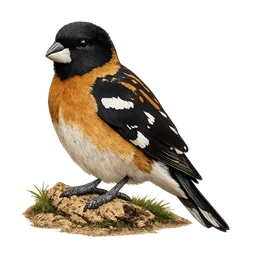
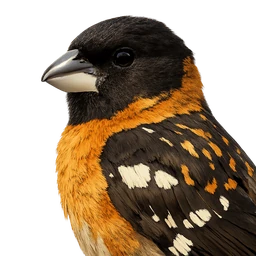
Profile
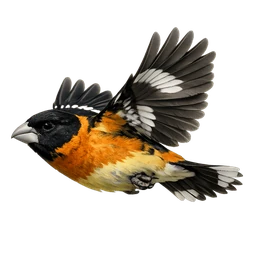
In flight
Songbirds
Black-headed Grosbeak
Pheucticus melanocephalus
- uncommon
- 40 km/h
- Least Concern
Male is cinnamon-orange with a black hood; both parents sing on the nest. Even monarch butterflies aren't too toxic to eat.
- Population
- ~15 million mature individuals globally (Partners in Flight / BirdLife DataZone estimate), stable trend
- Habitat
- Deciduous and mixed woodlands with large trees and thick understory shrubs, including streamside corridors, river bottoms, canyons, and lakeshores; also uses suburban gardens and oak woodlands during migration/winter.
- Fun fact
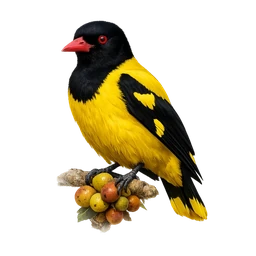
- Black-headed Grosbeaks are one of only two known animal species (the other being the black-backed oriole) that can safely eat toxic monarch butterflies on their Mexican wintering grounds — sometimes over a million per season — thanks to an evolved mutation in their sodium-pump gene that confers resistance to the cardiac glycosides monarchs sequester from milkweed.
- Range
- Breeds from southwestern British Columbia and the western United States south through the western US into central Mexico; winters mainly in central and southern Mexico.
- Diet
- Omnivorous — seeds, berries and fruit, insects and spiders (predominantly insects/spiders in summer); notably one of only two known animals (along with the black-backed oriole) able to safely eat toxic monarch butterflies via an evolved sodium-pump gene mutation conferring resistance to cardiac glycosides, sometimes consuming over a million monarchs per season at Mexican overwintering colonies.
- Size
- 0.19 m
- Wingspan
- 0.32 m
- Lifespan
- 8 years