
Profile

In flight
Seabirds
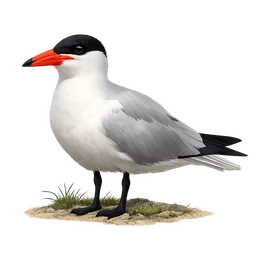
Caspian Tern
Hydroprogne caspia
- common
- 56 km/h
- Starter
- Least Concern
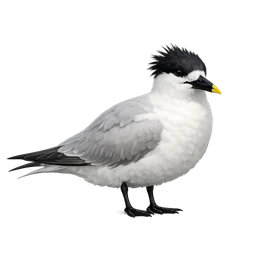
Largest tern in the world, with a thick coral-red bill. Your message rides first class.
- Population
- roughly 250,000–470,000 individuals globally (2012 estimate cited by BirdLife DataZone/IUCN); overall trend increasing, with some regional populations (e.g. Baltic Sea) declining
- Habitat
- Sandy, shell-strewn, or shingle beaches, sand dunes, and bare rock islets/reefs for breeding; estuaries, lagoons, large lakes, reservoirs, and coastal waters with clear, shallow fishing grounds for foraging
- Fun fact
- The Caspian Tern is the largest tern species in the world, and the oldest known individual — banded in Michigan in 1986 and found in Illinois in 2018 — was at least 32 years, 1 month old (average Great Lakes lifespan is closer to 12 years).
- Range
- Subcosmopolitan but patchy/scattered distribution — breeds locally on coasts and large inland waters across North America, Europe, Asia, Africa, and Australasia; northern populations are migratory, wintering on southern coasts and in the tropics, while equatorial populations are largely sedentary
- Diet
- Almost entirely fish, caught by plunge-diving from flight into shallow water; also takes crustaceans (e.g. crayfish), occasionally large insects, eggs/chicks of other birds, and small rodents; sometimes kleptoparasitic on other terns
- Size
- 0.53 m
- Wingspan
- 1.36 m
- Lifespan
- 32 years