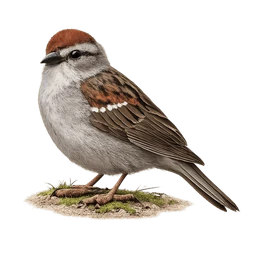
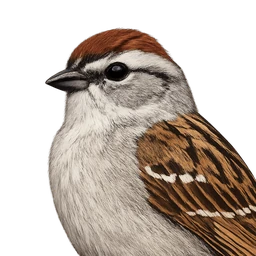
Profile
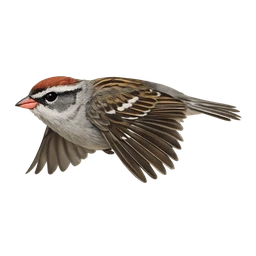
In flight
Songbirds
Chipping Sparrow
Spizella passerina
- epic
- 72 km/h
- Least Concern
Rufous cap, a single steady trill, builds nests so loose you can see through them. Reliable but not a perfectionist.
- Population
- ~240 million (Partners in Flight global breeding population estimate, per Cornell Lab All About Birds), with an estimated ~28% population decline between 1966 and 2019
- Habitat
- Open woodlands, forest edges, and clearings with scattered trees; in the west mainly coniferous forest (favoring evergreens where available), in the east woodland edges, farmland, parks, and shrubby or tree-lined gardens/backyards; favors grassy openings for foraging and low shrubs/conifers for nesting
- Fun fact
- Chipping Sparrows are named for their dry, mechanical trilling song rather than for a "chip" call, and breeding adults are easily identified by a crisp rufous crown contrasting with a white eyebrow stripe and black eyeline.
- Range
- Breeds across most of North America from central Canada and Alaska south through the United States to the highlands of Mexico and northern Nicaragua; northern populations are migratory, wintering in the southern United States, Mexico, and Central America
- Diet
- Primarily seeds of grasses and herbaceous plants year-round; shifts substantially toward insects and other arthropods during the breeding season to meet higher protein needs and feed nestlings; occasionally eats small fruits (e.g. cherries)
- Size
- 0.135 m
- Wingspan
- 0.21 m
- Lifespan
- 11 years