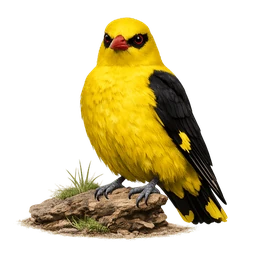
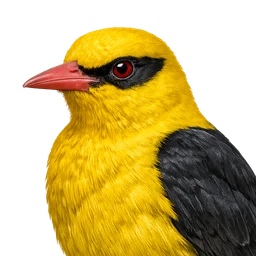
Profile
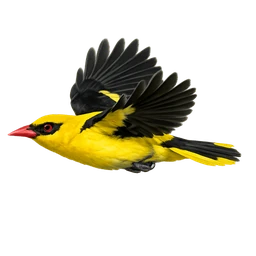
In flight
Tropical Birds
Eurasian Golden Oriole
Oriolus oriolus
- epic
- 72 km/h
- Least Concern
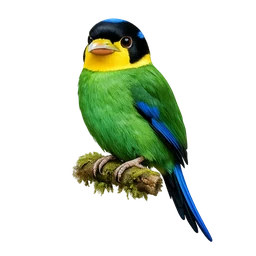
Brilliant yellow male that's almost impossible to see despite the color. Sings a flute call from deep canopy.
- Population
- 13.4–22.5 million mature individuals (BirdLife International/IUCN Red List assessment, published 2017 based on 2016 review; population trend stable)
- Habitat
- Deciduous and mixed broadleaf woodlands (oak, poplar, ash), riverine forest, orchards, groves, and parks/large gardens with tall trees, typically below 600 m (locally to 2000 m in parts of its range); on migration and in African winter quarters uses drier open woodland, savanna, oases and isolated fig trees
- Fun fact
- Despite the male's vivid black-and-gold plumage, the Eurasian Golden Oriole is notoriously hard to spot in leaf canopy and is far more often heard than seen, its fluting "weela-wee-ooo" song carrying through woodland long before the bird itself is glimpsed.
- Range
- Breeds across most of Europe (west to Britain and Iberia, though now effectively extinct as a British breeder — last confirmed UK breeding 2009) and western/central Asia east to the Altai and western China; winters in central and southern Africa, migrating mainly at night
- Diet
- Mainly insects (especially caterpillars) and other invertebrates (spiders, earthworms, snails) gleaned from foliage or caught in flight; also fruit and berries (especially in late breeding season and on migration); occasionally small vertebrates (lizards, mice, nestlings)
- Size
- 0.245 m
- Wingspan
- 0.455 m
- Lifespan
- 10 years