Profile
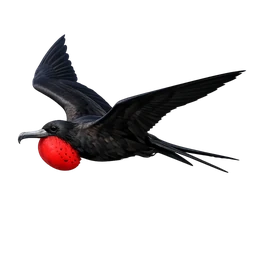
In flight
Celestial Couriers
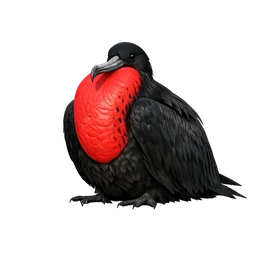
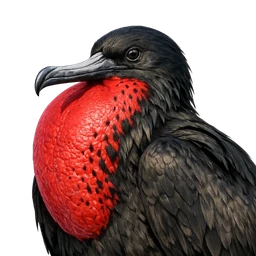
Great Frigatebird
Fregata minor
- celestial
- 153 km/h
- Least Concern
Stays aloft for weeks on updrafts, rarely landing. Steals fish mid-air from other seabirds. Built for the long haul.
- Population
- ~120,000 mature individuals (declining)
- Habitat
- Breeds colonially on remote tropical and sub-tropical islands, nesting in mangroves, low trees/bushes, or occasionally on bare ground; forages over open tropical and subtropical ocean waters (neritic and oceanic), typically within about 80 km of the breeding colony.
- Fun fact
- Great Frigatebirds cannot swim or walk well and their feathers are not fully waterproof, so they must snatch all their food from the ocean surface in flight; they have the highest wing-area-to-body-mass ratio of any bird and can remain aloft for weeks at a time.
- Range
- Pantropical: Pacific Ocean (including Hawaii and the Galápagos), Indian Ocean (Seychelles, Mauritius, Christmas Island), and South Atlantic (St. Helena, Trindade, Brazil); largely sedentary as adults, with immatures dispersing widely across tropical seas (excepting the east/central Atlantic).
- Diet
- Mainly fish (especially flying fish) and squid caught by snatching prey from the sea surface without landing on the water; also takes seabird eggs/chicks and steals food from other seabirds in flight (kleptoparasitism).
- Size
- 0.95 m
- Wingspan
- 2.17 m
- Lifespan
- 44 years