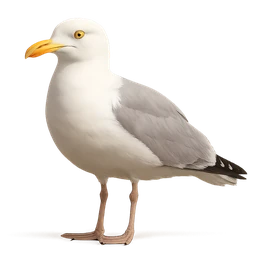
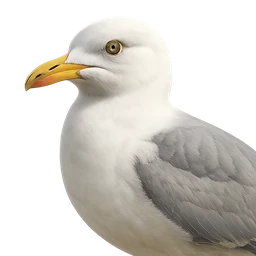
Profile
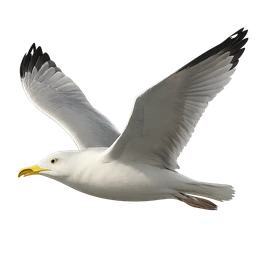
In flight
Seabirds
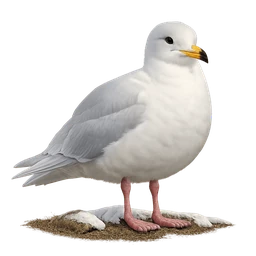
Herring Gull
Larus argentatus
- common
- 48 km/h
- Starter
- Least Concern
Will deliver your message, but might steal your lunch first. Classic seagull energy.
- Population
- ~1,060,000-1,220,000 mature individuals (531,000-608,000 breeding pairs, 2018 estimate), decreasing
- Habitat
- Coastal and near-coastal areas — rocky shores, sandy beaches, cliffs and islands for breeding — with extensive foraging inland at lakes, reservoirs, farmland and refuse dumps; increasingly nests on urban rooftops.
- Fun fact
- Herring Gulls sometimes "paddle" the ground with rapid foot-stomping to mimic the vibration of falling rain, tricking earthworms into surfacing so the gulls can eat them.
- Range
- Breeds from Iceland and the British Isles across northwestern Europe to northwestern Russia and northern Siberia; northern populations migrate to winter along maritime northwestern Europe while southern populations are largely resident. (Note: North American "herring gulls" are treated as a separate species, the American Herring Gull, Larus smithsonianus, by BirdLife/HBW, BOU and AERC, but the AOS has NOT adopted this split as of 2024 and still treats it as a subspecies of L. argentatus.)
- Diet
- Highly opportunistic omnivore/scavenger: fish, marine invertebrates (crustaceans and echinoderms often outweigh fish in stomach contents), eggs and chicks of other birds, carrion, and human refuse/discarded catch at landfills and fishing boats.
- Size
- 0.61 m
- Wingspan
- 1.4 m
- Lifespan
- 30 years