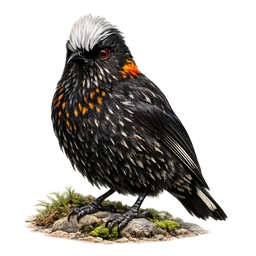
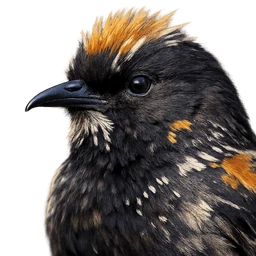
Profile
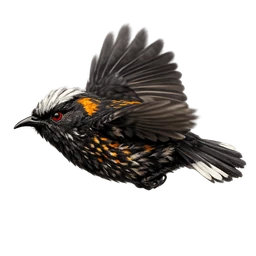
In flight
Songbirds
ʻĀkohekohe
Palmeria dolei
- mythic
- 120 km/h
- Critically Endangered
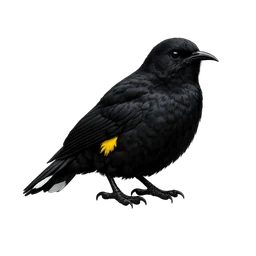
Crowned with a tuft of silver bristles like a punk-rock honeycreeper. One of Maui's last forest voices.
- Population
- ~1,100-2,500 mature individuals (BirdLife/IUCN 2021 assessment, based on 2017 survey estimate of ~1,768 individuals, 95% CI 1,193-2,411, an ~68% decline 2001-2017); frequently cited elsewhere (e.g. Wikipedia, uncited) as "~3,800" total individuals across two Haleakalā populations — likely a total-population (incl. immatures) figure vs. IUCN's "mature individuals" metric
- Habitat
- High-elevation wet/mesic forest of koa (Acacia koa) and ʻōhiʻa lehua (Metrosideros polymorpha) on the windward (NE) slopes of Haleakalā, Maui, roughly 1,100-2,300 m elevation (99% of range above 1,500 m, mostly below 2,100 m)
- Fun fact
- Thought possibly extinct after vanishing from Molokaʻi by the early 1900s, the ʻĀkohekohe was rediscovered on Maui's Haleakalā in 1945; at 24-29 g it is the largest, and among the most aggressively territorial, of Hawaiʻi's remaining honeycreepers, routinely chasing ʻapapane and ʻiʻiwi off prime ʻōhiʻa blossoms.
- Range
- Endemic to Maui, Hawaiʻi, restricted to the windward slopes of Haleakalā (occupied area ~70 km², split by the Koʻolau Gap into two subpopulations); formerly also on Molokaʻi, extirpated there by ~1907
- Diet
- Primarily nectarivorous, feeding mainly on ʻōhiʻa lehua flower nectar; supplements with invertebrates and, when ʻōhiʻa bloom is scarce, fruit and nectar from other plants (e.g. ʻākala/Hawaiian raspberry); nests almost exclusively in ʻōhiʻa trees
- Size
- 0.175 m