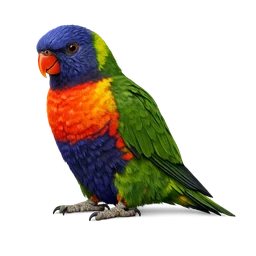
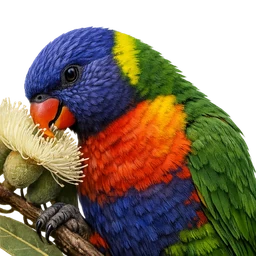
Profile
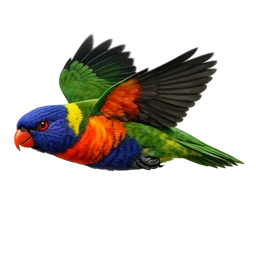
In flight
Parrots
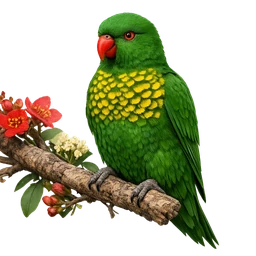
Rainbow Lorikeet
Trichoglossus moluccanus
- uncommon
- 55 km/h
- Least Concern
A brush-tipped tongue laps nectar straight from blossoms. Screams into every eucalyptus at sunset with zero apology.
- Population
- Global population unquantified by IUCN/BirdLife; described as abundant in northern Australia, rare in Tasmania, with an overall decreasing population trend (per BirdLife DataZone 2024 assessment)
- Habitat
- Rainforest, coastal bush, woodlands, and well-treed urban/suburban areas, from sea level up to about 700 m elevation
- Fun fact
- The Rainbow Lorikeet has a specially adapted tongue tipped with brush-like/papillate structures that it uses to lap up nectar and pollen from flowers.
- Range
- Native and resident along Australia's eastern seaboard from northern Queensland to South Australia (extent of occurrence ~3,810,000 km²); introduced/naturalized populations established in Tasmania, near Perth (Western Australia), Auckland (New Zealand), and Hong Kong
- Diet
- Primarily nectar and pollen from flowering trees/shrubs (e.g. eucalyptus, Grevillea, Pittosporum), plus fruits, seeds, and occasional insects; has a specialized brush/papillate-tipped tongue for harvesting nectar and pollen
- Size
- 0.27 m