Profile
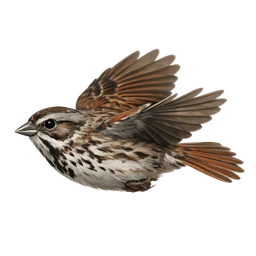
In flight
Songbirds
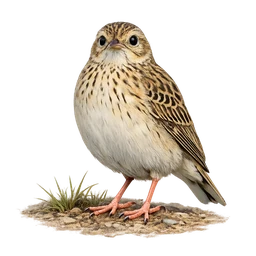
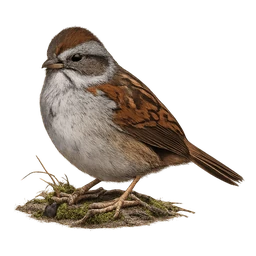
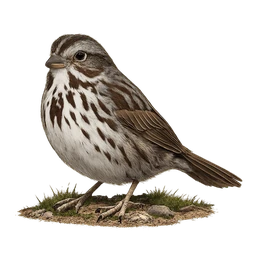
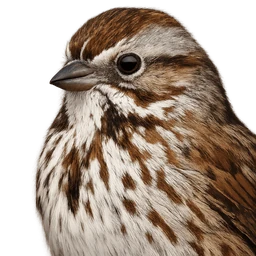
Song Sparrow
Melospiza melodia
- epic
- 72 km/h
- Least Concern
Knows up to 20 versions of its own song and improvises the rest. A jazz musician with a beak.
- Population
- ~130 million mature individuals (global breeding population; BirdLife/Partners in Flight estimate, ~2019), with a documented moderate long-term decline (~0.7%/year 1970–2017) despite the large population
- Habitat
- Brushy, shrubby, and wet edge habitats — marsh (including salt marsh) edges, wetland borders, hedgerows, overgrown fields, suburban gardens, agricultural fields, and roadsides with dense low vegetation; a broad habitat generalist
- Fun fact
- Song Sparrows are famous for vocal virtuosity — an individual male can sing as many as 20 distinct song types with hundreds (up to ~1000 cited variations) of improvised variations, learned from neighboring birds; the species also shows striking regional variation across its ~25 recognized subspecies, from pale, small desert birds to large, dark, heavily-streaked Aleutian Island populations.
- Range
- Breeds across most of North America from Alaska/the Aleutian Islands through Canada and the continental United States, plus an isolated population on the central Mexican plateau; northern populations migrate to the southern US/Mexico in winter, with a mostly non-migratory presence across milder parts of its range; rare vagrant to western Europe
- Diet
- Omnivorous: insects and other invertebrates (beetles, caterpillars, grasshoppers, spiders, earthworms) especially in breeding season, plus seeds and fruit (buckwheat, ragweed, sunflower, berries, wild cherries) year-round; coastal salt-marsh populations also take small crustaceans
- Size
- 0.145 m
- Wingspan
- 0.21 m
- Lifespan
- 11 years