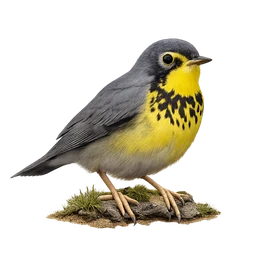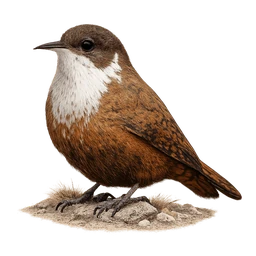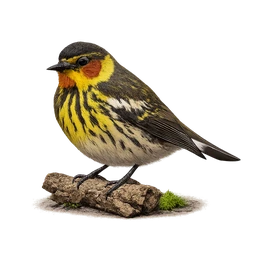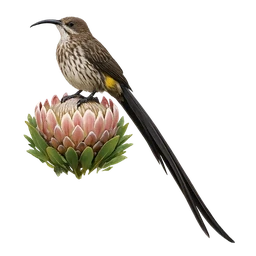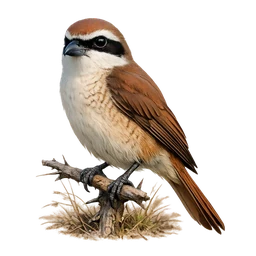
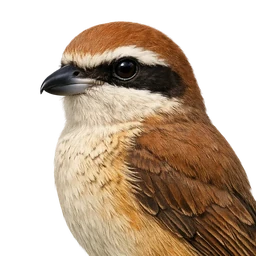
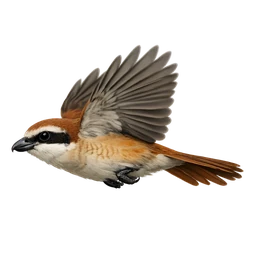
Burung kicau (Songbirds)
Brown Shrike
Lanius cristatus
- tidak umum
- 48 km/h
- Risiko rendah
A long-distance traveler with a bandit's mask — bred in Siberia, wintering in mango groves, never the same perch two days in a row. Small, fierce, and famously hard to fool.
- Populasi
- Global population size has not been quantified; overall trend is decreasing, with steep regional declines documented (e.g. an estimated 80% decline in Japan between the 1970s and 1990s)
- Habitat
- Breeds in bushes and trees along the edges of coniferous, mixed, or deciduous forest and its clearings, forested steppe, and thickets along streams or swamp edges; on migration and in winter uses open scrub, woodland margins, secondary growth, cultivated field edges, and gardens, mostly in lowlands but up to about 1,800-2,000 m
- Fakta menarik
- The Brown Shrike's genus name Lanius is Latin for "butcher," a nod to its habit of impaling grasshoppers, lizards, and even small birds on thorns to cache them for later — the same larder behavior that gives shrikes the nickname "butcherbirds."
- Sebaran
- Breeds across central and eastern Asia from Siberia and Mongolia east to Kamchatka, and south through Japan, Korea, and China; winters from the Indian subcontinent through Southeast Asia to Indonesia and the Philippines; a rare vagrant to Europe, the Middle East, and even North America (e.g. Nova Scotia)
- Makanan
- Mainly insects (grasshoppers, beetles, moths and other Lepidoptera), supplemented with small vertebrates such as small birds, lizards, rodents, and amphibians; hunts by sallying from a prominent perch and characteristically impales surplus prey on thorns or barbed wire to cache it
- Ukuran
- 0,19 m
- Bentang sayap
- 0,235 m
- Masa hidup
- 1,9 tahun