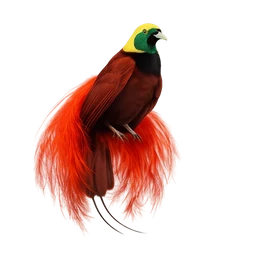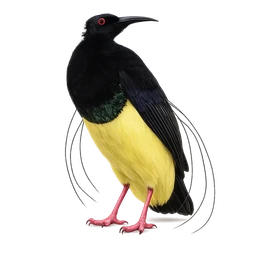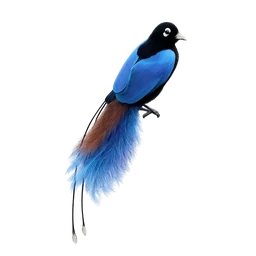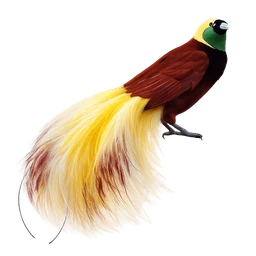
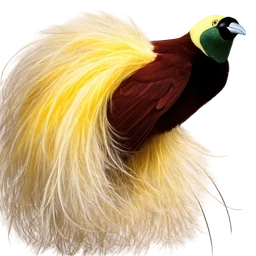

Cenderawasih (Birds of Paradise)
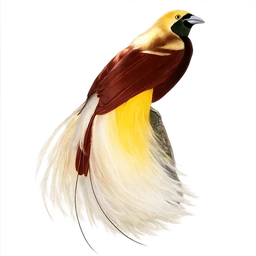
Greater Bird-of-paradise
Paradisaea apoda
- epik
- 40 km/h
- Risiko rendah
Named 'apoda,' meaning no feet, because European collectors received footless skins and thought it never landed.
- Populasi
- Not precisely quantified; species is described as common throughout its native range and remains globally unthreatened. A commonly cited historical pressure is plume hunting (severe enough in the early 1900s to motivate the Little Tobago introduction attempt), but its current population trend is not quantified.
- Habitat
- Lowland and hill tropical forest
- Fakta menarik
- Male Greater Birds-of-paradise gather at communal lek display grounds, calling before sunrise and performing ritualized poses (using at least eight distinct "wauk" vocalization types) while raising their cascading yellow and white flank plumes to attract females.
- Sebaran
- Southwest New Guinea (Indonesia) and the Aru Islands; a population introduced by Sir William Ingram to Little Tobago, Trinidad and Tobago (1909-1912) to safeguard the species from plume-trade overhunting persisted until roughly the 1960s and is now extirpated
- Makanan
- Omnivorous — mainly fruit (tree fruits including nutmeg and mahogany-family fruits) supplemented with arthropods; seeds are dispersed via guano, making it an important forest seed disperser
- Ukuran
- 0,43 m
- Masa hidup
- 8 tahun