
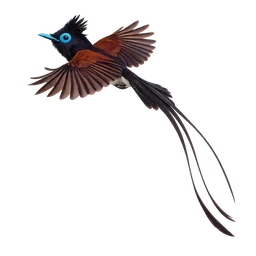
Burung kicau (Songbirds)
Japanese Paradise Flycatcher
Terpsiphone atrocaudata
- epik
- 43 km/h
- Risiko rendah
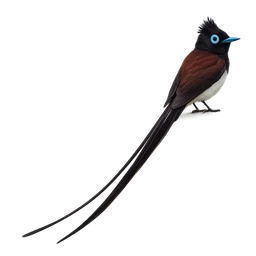
Breeds in Japan and Korea, winters in Southeast Asia. Males grow tail streamers nearly twice their body length.
- Populasi
- Global population size has not been quantified; estimated to exceed 10,000 mature individuals with a stable-to-increasing trend — confirmed/probable breeding squares rose from 204 (1997-2002) to 411 (2016-2021), and Taiwan/Lanyu habitat is expanding.
- Habitat
- Mature deciduous or mixed forest and plantations on low hills and mountains up to about 1,000 m during breeding; in winter uses various forest types up to about 700 m including mangroves; migrants also stop over in open woodland, suburban parks and gardens in lowlands
- Fakta menarik
- The species' Japanese name, sankocho (三光鳥, "bird of three lights"), comes from its song, traditionally rendered as tsuki-hi-hoshi ("moon, sun, stars"), and breeding males grow central tail streamers roughly three times their own body length while females remain short-tailed and duller.
- Sebaran
- Breeds in Japan (southern Honshu, Shikoku, Kyushu, Nansei Shoto/Ryukyu and Izu Islands), South Korea, North Korea, Taiwan and Lanyu Island, and the Batanes Islands of the northern Philippines; winters from southern China through mainland Southeast Asia (Thailand, Laos, Vietnam), Peninsular Malaysia, Singapore, Sumatra/Java (Indonesia), and parts of the Philippines
- Makanan
- Insectivorous — an aerial hawker that catches flying insects on the wing within and around forest canopy, typical of Terpsiphone flycatchers
- Ukuran
- 0,45 m
- Masa hidup
- 2,3 tahun