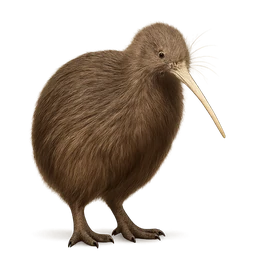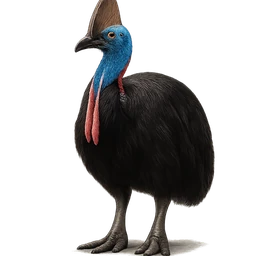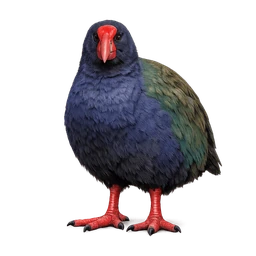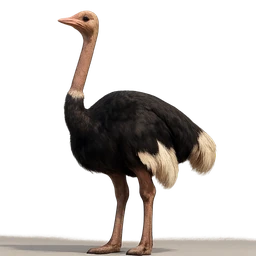
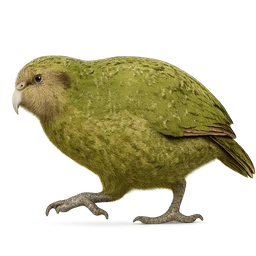
Klub tak bisa terbang (Flightless Club)
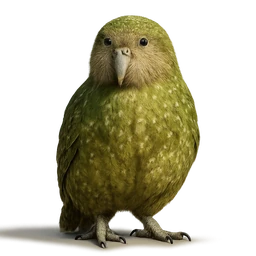
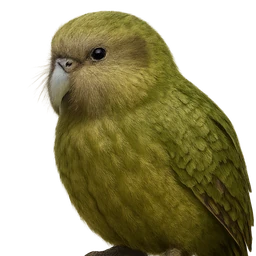
Kākāpō
Strigops habroptilus
- mistis
- 8 km/h
- Kritis
Flightless, nocturnal parrot that booms like a subwoofer. About 235 adults left, and 2026 was a record breeding year.
- Populasi
- ~235 individuals, all radio-tagged, individually tracked and named; up from a low of ~50 in the 1990s
- Habitat
- Historically temperate rainforest, scrubland, and tussock grassland; today confined to a handful of intensively managed predator-free offshore islands (and one fenced mainland sanctuary) with dense native forest and high rainfall, up to ~700 m elevation
- Fakta menarik
- The kākāpō is the world's only flightless parrot and its heaviest parrot species, and during the breeding season males inflate a thoracic air sac and produce a resonant, low-frequency "booming" call from bowl-shaped depressions (track-and-bowl systems) that can carry several kilometers to attract females.
- Sebaran
- Endemic to New Zealand. Formerly widespread across North, South, and Stewart Islands but functionally extinct in its natural range; the population now lives on intensively managed predator-free islands — Whenua Hou (Codfish Island), Anchor Island, Maud Island, and Hauturu (Little Barrier Island, reintroduced 2012) are current sites — plus a 2023 reintroduction of four males to the fenced Sanctuary Mountain Maungatautari on the mainland, New Zealand's first mainland kākāpō population in decades (partially unsuccessful; some escapees were relocated back to island sites). Birds were also historically held on Pearl and Chalky Islands before consolidation into Anchor Island in 2005; the exact live island roster shifts over time as the Kākāpō Recovery Programme continues translocations.
- Makanan
- Entirely herbivorous — seeds, fruits, leaves, buds, flowers, fern fronds, bark, roots, rhizomes, bulbs, and shoots of native plants, with rimu fruit an especially important, breeding-triggering food source in mast years
- Ukuran
- 0,61 m
- Bentang sayap
- 0,82 m
- Masa hidup
- 60 tahun