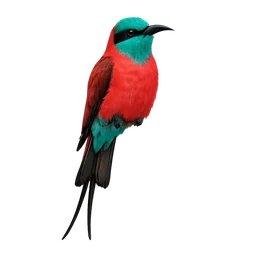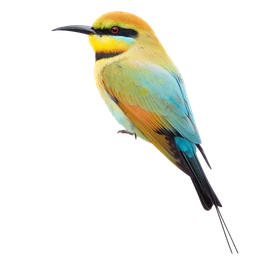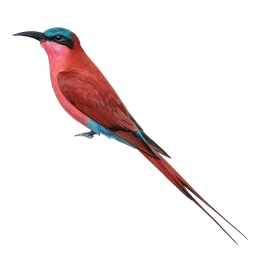
Kirik-kirik dan tiong-lampu (Bee-eaters & Rollers)
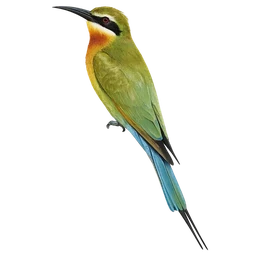
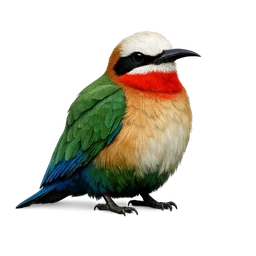
Little Bee-eater
Merops pusillus
- tidak umum
- 40 km/h
- Risiko rendah
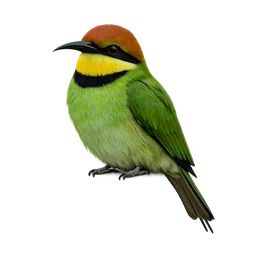
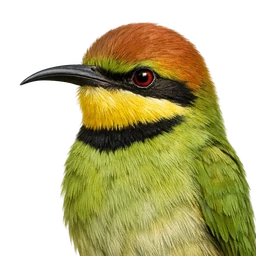
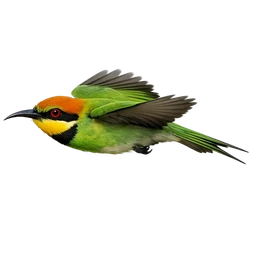
Africa's smallest bee-eater. Catches bees mid-air and wipes off venom on a branch before swallowing. Often perches in pairs.
- Populasi
- Not numerically quantified; species is common and widespread across an extent of occurrence of ~14–22 million km², with population trend suspected decreasing due to pesticide spraying for tsetse-fly control.
- Habitat
- Open country with scattered bushes, preferably near water — dry and moist savanna, acacia steppe, grassland/shrubland, riparian and seasonally flooded/marshy areas, rocky outcrops, and arable/human-modified land; found from sea level up to high elevation (up to ~5,000 m), low forest dependency
- Fakta menarik
- Unlike most bee-eaters, which nest colonially, the Little Bee-eater nests solitarily, digging its own tunnel into sandy banks or repurposing old aardvark burrows.
- Sebaran
- Sub-Saharan Africa, resident/non-migratory across 40+ countries from Senegal, Mauritania and Guinea-Bissau in the west to Somalia in the east and south to South Africa; extent of occurrence estimated at ~14–22 million km²
- Makanan
- Aerial insects caught by sallying from a low perch, mainly bees, wasps and hornets, plus other flying invertebrates; stingers/venom sacs are removed by repeatedly striking prey against a branch, wire or hard surface before swallowing
- Ukuran
- 0,16 m
- Masa hidup
- 4 tahun