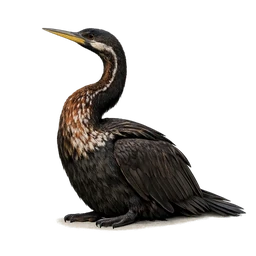
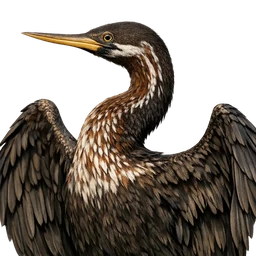
Profile
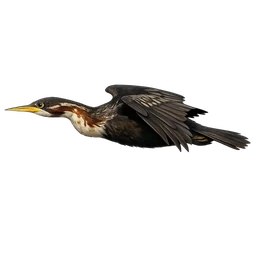
In flight
Seabirds
Australasian Darter
Anhinga novaehollandiae
- uncommon
- 40 km/h
- Least Concern
Swims with its body underwater and only its snake-like neck above the surface. Feathers aren't waterproof.
- Population
- Not numerically quantified — confirmed directly against the primary 2024 IUCN Red List assessment (BirdLife International, e.T22696719A263684970, assessed 12 Jun 2024), which lists population size as unquantified and current trend as "stable" (suspected to fluctuate with wetland habitat conditions)
- Habitat
- Freshwater and brackish wetlands, lakes, rivers, swamps and sheltered coastal waters, typically more than 0.5 m deep with fallen trees, logs, or vegetated banks for perching and wing-drying; occasionally inland saline waters
- Fun fact
- Nicknamed the "snakebird" because it swims with its body submerged and only its long, slender, kinked neck visible above the water, giving it a serpentine appearance; a banded individual was once recovered 2,431 km from its banding site.
- Range
- Australia (widespread except the driest interior deserts — Great Sandy, Great Victoria, Nullarbor — and only an uncommon vagrant to Tasmania), New Guinea, Indonesia (Moluccas, Lesser Sunda Islands), New Britain, and Timor-Leste; IUCN also notes vagrant records in New Zealand. IUCN-mapped extent of occurrence ~13.1 million km²
- Diet
- Mainly fish (e.g. Australian smelt, bony bream, spangled perch, gudgeon, introduced goldfish, carp and redfin perch) caught by underwater diving and spearing with its sharp bill, supplemented by turtles (incl. New Guinea snake-necked turtle), freshwater shrimp, aquatic insects, and other invertebrates
- Size
- 0.9 m
- Wingspan
- 1.2 m
- Lifespan
- 17 years