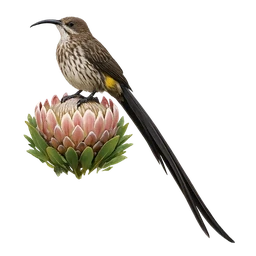
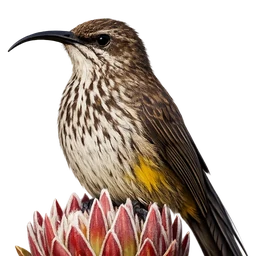
Profile
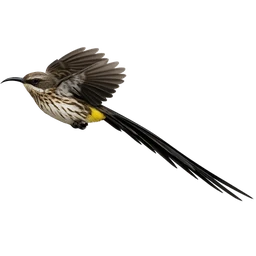
In flight
Songbirds
Cape Sugarbird
Promerops cafer
- epic
- 35 km/h
- Least Concern
Male sports a tail longer than its body, perches on Protea blooms to feed. Endemic to South Africa's fynbos.
- Population
- Estimated 10,000-100,000 mature individuals (population suspected stable); no single precise IUCN/BirdLife global count is published, described as "common in suitable habitat" with an extensive range
- Habitat
- Fynbos shrubland biome of South Africa, especially mature stands of flowering Protea and Erica (also Leucospermum/pincushions and Aloe); avoids recently burned areas; also visits gardens seasonally (e.g. well represented at Kirstenbosch)
- Fun fact
- Male Cape Sugarbirds have dramatically elongated tail feathers (22-32 cm, versus 11-15 cm in females) that produce a distinctive rattling "frrt-frrt" sound in flight, used in display to attract mates.
- Range
- Endemic to South Africa's Cape Floral Region: from the Cederberg Mountains through the Western Cape into southwestern and southern Eastern Cape, extending to around the Buffalo River
- Diet
- Specialist nectarivore on Proteaceae (protea, pincushion) and Erica flowers, using a long curved bill and brush-tipped tongue; supplements with insects hawked from the air (beetles, bees, flies, ants, wasps, aphids, moths) and spiders
- Size
- 0.44 m