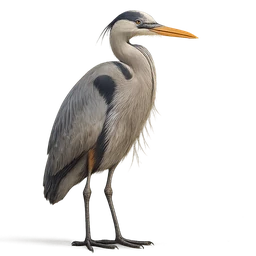
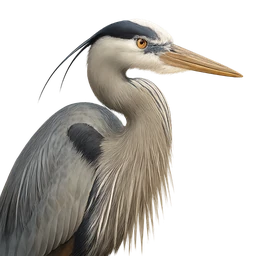
Profile
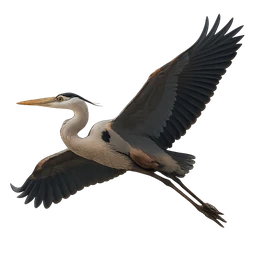
In flight
Cranes & Waders
Great Blue Heron
Ardea herodias
- common
- 40 km/h
- Starter
- Least Concern
Stands perfectly still for hours, then delivers your message in one lightning strike.
- Population
- Global population roughly 500,000–5,000,000 mature individuals per IUCN/BirdLife DataZone (2019-basis assessment); Partners in Flight separately estimates ~700,000 individuals; trend increasing (North American population up >10% since the 1960s)
- Habitat
- Fresh and saltwater wetlands — marshes, mangrove swamps, flooded meadows, lake edges, and shorelines; also forages in grasslands and agricultural fields; nests colonially in trees near water, typically within 2–4 miles of feeding areas
- Fun fact
- Despite standing over a meter tall, a Great Blue Heron typically weighs only 2.3–2.7 kg (5–6 lb) — its bones are hollow, an adaptation that keeps it light enough for flight; the oldest banded wild individual on record lived at least 24 years, 6 months.
- Range
- North America from Alaska and southern Canada south through the continental US, Mexico, Central America and the Caribbean to northwestern South America; northern populations migratory/winter further south, southern populations resident year-round; rare vagrant to Europe/Azores
- Diet
- Primarily fish (preferring ~10–20 cm prey), plus amphibians, reptiles, crustaceans, insects, small mammals (voles, shrews, rats), and occasionally other birds; hunts by standing-and-waiting or slow-stalking, then spearing/grasping prey with its dagger-like bill
- Size
- 1.14 m
- Wingspan
- 1.84 m
- Lifespan
- 24 years