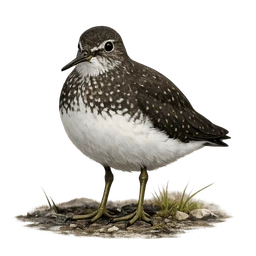
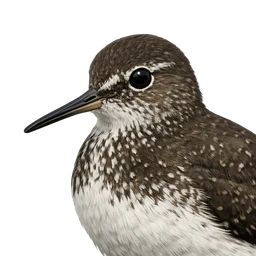
Profile
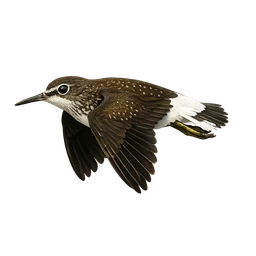
In flight
Cranes & Waders
Green Sandpiper
Tringa ochropus
- uncommon
- 40 km/h
- Least Concern
Nests in old thrush nests up trees, which is wildly out of character for a wader. Your message takes the scenic route.
- Population
- 1,830,000–3,200,000 mature individuals globally; stable trend
- Habitat
- Breeds in damp, swampy woodland (old pine, spruce, or alder forest) near water, nesting in disused tree nests of other birds such as fieldfares or thrushes; in the non-breeding season it favors small freshwater sites — marshes, ditches, streams, pools, and sewage farms — often too enclosed for other waders.
- Fun fact
- Unlike almost all other sandpipers, which nest on the ground, the Green Sandpiper lays its eggs in old tree nests abandoned by species such as fieldfares, pigeons, or thrushes.
- Range
- Breeds across Scandinavia and northern/eastern Europe through Siberia to isolated pockets in Kyrgyzstan and northwest China; winters from the Mediterranean and sub-Saharan Africa across the Middle East and Indian subcontinent to southern Japan, eastern China, the Philippines, and northern Borneo, with small numbers wintering in western Europe (including Britain).
- Diet
- Small invertebrates picked from mud and shallow water — aquatic and terrestrial insects and their larvae, small crustaceans and spiders — with occasional small fish and plant matter.
- Size
- 0.22 m
- Wingspan
- 0.59 m
- Lifespan
- 10 years