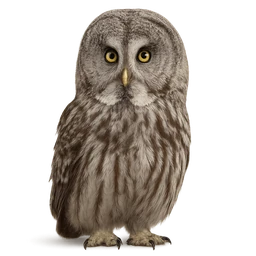
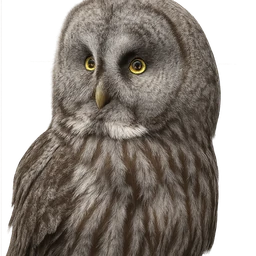
Profile
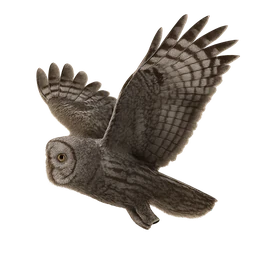
In flight
Owls
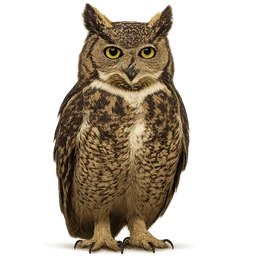
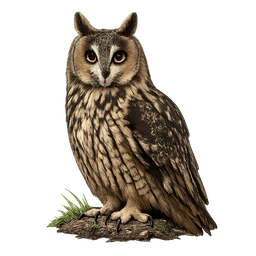
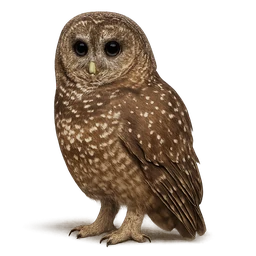
Great Gray Owl
Strix nebulosa
- uncommon
- 64 km/h
- Least Concern
The phantom of the forest. Huge face, tiny body underneath all those feathers.
- Population
- IUCN Red List (last assessed 2021): 50,000-99,999 mature individuals globally, population trend stable to increasing across surveyed European and North American range segments. Converting mature-individual counts to total-individual estimates (standard ~1.5-2x multiplier for age structure) yields a rough total in the ~100,000-190,000 range, consistent with the wider figures circulated in secondary sources. Treat the mature-individual figure (50,000-99,999) as the authoritative IUCN metric; the "190,000 total individuals" figure is a derived/secondary approximation, not a directly-cited IUCN number.
- Habitat
- Dense boreal/taiga coniferous (or mixed) forest bordering open meadows, bogs, or muskeg
- Fun fact
- The great gray owl is the world's longest owl by length, but its huge, fluffy facial disc (the largest of any raptor, functioning like a radar dish for sound) and dense plumage are mostly insulation and air — its actual body mass is lighter than that of the visibly smaller great horned or snowy owl, and its acute hearing lets it locate and plunge feet-first through dense snow to catch rodents moving more than a foot below the surface, strong enough in one recorded case to punch through snow crust that could support a 176-lb human.
- Range
- Holarctic — circumpolar across boreal forests of North America (Alaska through Canada into the northern US, with a disjunct montane population in the Sierra Nevada of California), northern Europe (e.g. Finland/Scandinavia), and northern Asia
- Diet
- Small mammals, chiefly voles, pocket gophers, and other rodents (also mice, shrews, squirrels, weasels, occasional small birds/frogs), detected largely by hearing and caught by plunging feet-first through snow more than a foot deep
- Size
- 0.7 m
- Wingspan
- 1.42 m
- Lifespan
- 18 years