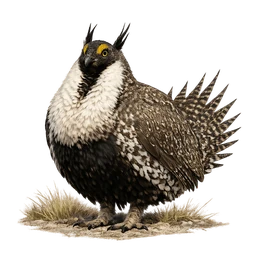
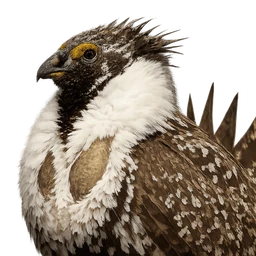
Profile
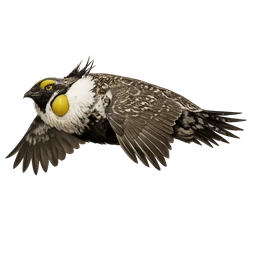
In flight
Game Birds
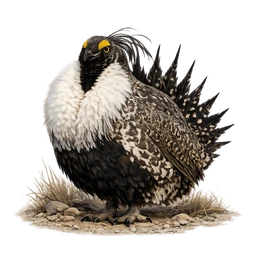
Greater Sage-Grouse
Centrocercus urophasianus
- epic
- 70 km/h
- Vulnerable
Males puff two yellow air sacs and pop like champagne corks at dawn. Your message arrives in full lek regalia.
- Population
- 289,000–550,000 mature individuals per the 2025 BirdLife/IUCN assessment (precautionary point estimate ~350,000), down from an estimated ~16 million a century ago; population declining ~2.9–3.0% per year
- Habitat
- Obligate resident of sagebrush (shrub-steppe) ecosystems — sagebrush-grassland and juniper-sagebrush-grassland communities; requires large, intact expanses of sagebrush for both food and cover year-round
- Fun fact
- Male Greater Sage-Grouse perform an elaborate strutting display on communal leks, inflating a pair of yellow-green esophageal air sacs on their chest and popping them to produce a distinctive booming, popping sound to attract females.
- Range
- Sagebrush country of the western United States (historically 16 states, now extirpated from several, primarily remaining in Wyoming, Idaho, Montana, Nevada, Oregon, Utah, North Dakota, South Dakota, Colorado) and southern Alberta and Saskatchewan, Canada; extirpated from British Columbia; range is severely fragmented and in continuing decline
- Diet
- Sagebrush leaves make up the bulk of the diet year-round (roughly 60%+ of annual food volume) thanks to a specialized gut adapted to its toxins; also eats forbs (e.g. dandelion, yarrow, legumes) and grasses, with insects an important addition/requirement for chicks
- Size
- 0.65 m
- Lifespan
- 9 years