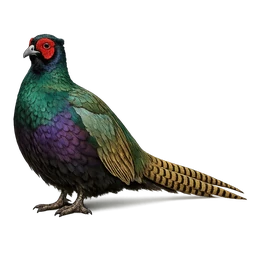
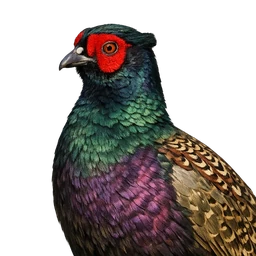
Profile
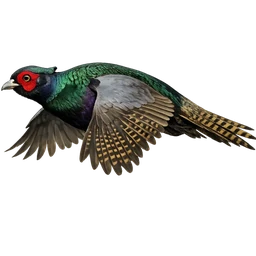
In flight
Game Birds
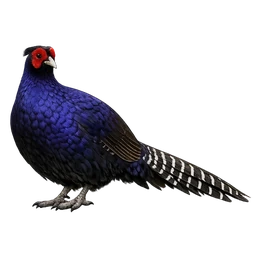
Japanese Green Pheasant
Phasianus versicolor
- epic
- 38 km/h
- Least Concern
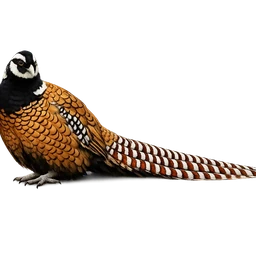
Japan's national bird. Males glow iridescent green with red eye wattles and carry a long barred tail.
- Population
- No precise global numeric figure published. IUCN Red List assessment (BirdLife International 2016) describes the population size as "extremely large" with an estimated extent of occurrence of ~742,000 km²; trend is assessed as decreasing — an estimated 500,000 birds are shot annually (shooting of females prohibited) and large numbers are released to sustain populations, but overall numbers may be declining owing to habitat conversion for agriculture. Widely described elsewhere as common and widespread throughout its native range.
- Habitat
- Temperate forest, forest edges, and shrubland; also arable/farmland, grassland, parkland, brush, and riverbank open grassland from mountain foothills to lowlands; frequently found near human settlements. Upper elevation limit around 1,000 m.
- Fun fact
- The Green Pheasant is Japan's official national bird, designated by the Ornithological Society of Japan in 1947 partly because a hen leading her chicks together is seen as a symbol of family harmony, and it is depicted on the Japanese 10,000-yen banknote.
- Range
- Endemic (native, resident, non-migratory) to the Japanese archipelago — Honshu, Shikoku, Kyushu, and adjacent smaller islands. Successfully introduced/established on Hawaii; introduction attempts to North America and of the Common Pheasant into Japan have largely failed, as the two species produce fertile hybrids where they coexist but the Green Pheasant outcompetes the Common Pheasant in its native habitat.
- Diet
- Omnivorous — mainly plant matter (grass seeds, shoots, leaves, grains) supplemented with insects, worms, spiders, and other small invertebrates.
- Size
- 0.81 m
- Wingspan
- 0.77 m
- Lifespan
- 3 years