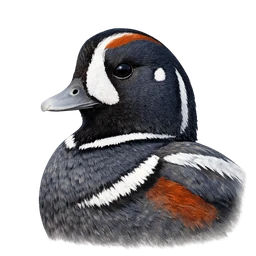
Profile
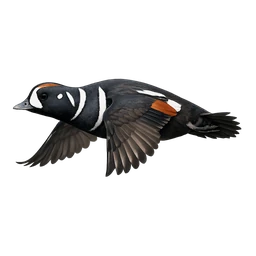
In flight
Waterfowl
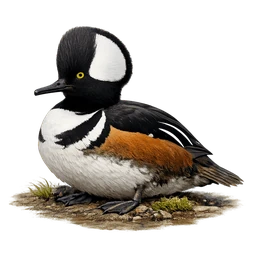
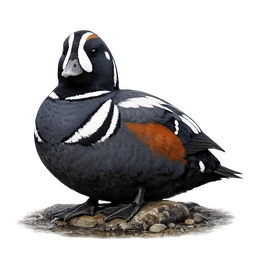
Harlequin Duck
Histrionicus histrionicus
- uncommon
- 72 km/h
- Least Concern
Painted in dramatic blue, white, and chestnut. Lives in whitewater rivers most ducks would never touch.
- Population
- Roughly 150,000–250,000 total, dominated by the Pacific/western North American population (~100,000 winter in the Aleutians alone); the disjunct Atlantic/eastern population is far smaller, only about 1,800–2,000 wintering birds. Ducks Unlimited itself notes there is no comprehensive global population estimate because of survey difficulty in the species' remote habitat, so treat this as a regional composite, not an authoritative global count.
- Habitat
- Fast-flowing, whitewater rivers and mountain streams (often with small islands/sandbars) during the spring/summer breeding season; rocky, surf-battered coastlines and intertidal zones in winter
- Fun fact
- Harlequin Ducks sustain more bone fractures than any other waterfowl species, and most adults carry multiple old, healed breaks from a lifetime spent in pounding surf and whitewater rapids (the oldest banded individual on record lived at least 20 years, 9 months).
- Range
- Breeds in disjunct populations in northwestern North America (Alaska, western Canada, Pacific Northwest), northeastern North America (Labrador/maritime eastern Canada), plus Greenland, Iceland, and far-eastern Russia; winters along the Pacific coast from the Aleutians to northern California and along the Atlantic coast from Greenland/Labrador south to the Chesapeake Bay area (Maine holds over half the eastern wintering population)
- Diet
- Aquatic invertebrates: on breeding rivers mainly aquatic insect larvae (e.g., midges) and fish eggs; in winter mainly marine invertebrates such as crabs, amphipods, mussels, limpets, periwinkles, snails, and barnacles
- Size
- 0.42 m
- Wingspan
- 0.66 m
- Lifespan
- 20 years