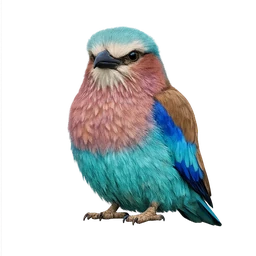
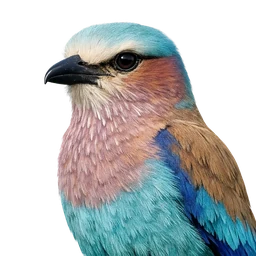
Profile
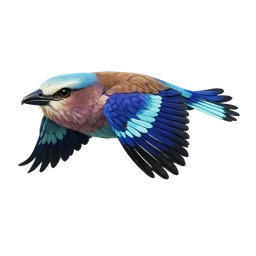
In flight
Bee-eaters & Rollers
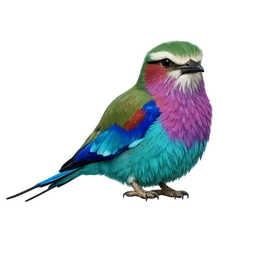
Indian Roller
Coracias benghalensis
- rare
- 50 km/h
- Near Threatened
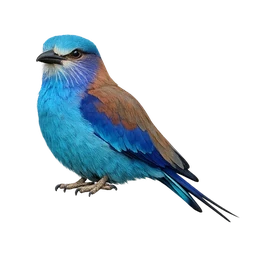
Folds its wings and you see brown. Opens them mid-roll and the sky explodes electric blue. State bird of three Indian states.
- Population
- Global total unquantified; regionally estimated at roughly 5,000-15,000 individuals in the UAE and ~15,000 breeding pairs across the Arabian Peninsula; still locally common across large parts of India but IUCN's own reassessment cites an overall decline (~6% over three generations, 2014-2021, with steeper ~30% declines in some regions) driving the 2025 uplisting
- Habitat
- Open, cultivated country — dry open farmland, pastures, groves, grasslands, and areas around villages (per IUCN); also described as open woodland (especially Acacia/Prosopis scrub) and well adapted to human-modified landscapes such as parks, gardens, roadside trees, and agricultural land; sea level to 2,200 m typically, exceptionally to 2,900 m
- Fun fact
- The Indian Roller is named for the male's (and female's) spectacular courtship display — steep, undulating flights with somersaults, nose-dives, hovering, and lateral rolling from side to side, accompanied by harsh croaking calls.
- Range
- West Asia (Iraq, Iran, Arabian Peninsula including UAE/Oman, winter records in Saudi Arabia/Qatar/Kuwait) east across Afghanistan and Pakistan through the Indian subcontinent (India, Nepal, Bhutan, Bangladesh, Sri Lanka)
- Diet
- Primarily insects (beetles make up roughly 45% of diet, grasshoppers and crickets about 25%), also spiders, scorpions, small snakes, frogs and other amphibians, and occasionally small reptiles, birds, or mammals
- Size
- 0.32 m
- Wingspan
- 0.7 m
- Lifespan
- 17 years