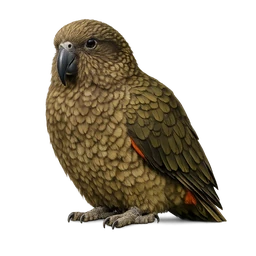
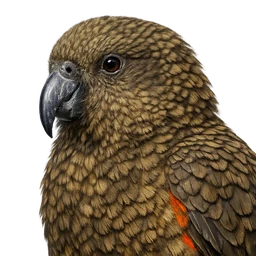
Profile
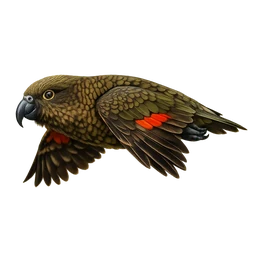
In flight
Parrots
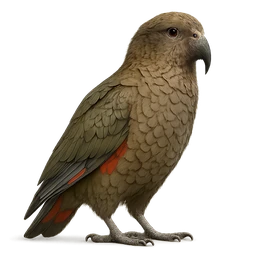
Kākā
Nestor meridionalis
- epic
- 48 km/h
- Vulnerable
New Zealand forest parrot that gouges bark with its curved bill, mimics humans, and shrieks loud enough to find you.
- Population
- 2,500-9,999 mature individuals, decreasing (IUCN assessment 29 Jul 2022, criteria A2ce)
- Habitat
- Large tracts of low- to mid-altitude native forest (podocarp and beech forest) from sea level to about 1,000 m; an obligate forest bird that gets all its food from trees and needs cavities in old/dying trees for nesting plus diverse year-round food sources.
- Fun fact
- The kaka's loud, chattering calls gave it its Maori name, and the bird is unusual among parrots for staying active after dark on fine, moonlit nights.
- Range
- Endemic to New Zealand, found on all three main islands. North Island subspecies (N. m. septentrionalis) persists in forest patches from Coromandel to Wairarapa, with significant populations mainly in Pureora and Whirinaki forests and some offshore islands. South Island subspecies (N. m. meridionalis) mostly west of the Southern Alps, Fiordland and southwestern Southland; also Stewart Island/Rakiura and predator-managed offshore islands (e.g. Kapiti, Codfish/Whenua Hou, Little Barrier, Ulva) — now most abundant where introduced mammalian predators (especially stoats) are absent or controlled.
- Diet
- Opportunistic, seasonally shifting forager on fruits, seeds, nectar, sap and honeydew (excreted by beech-forest scale insects), plus tree-dwelling invertebrates such as wood-boring beetle larvae.
- Size
- 0.45 m
- Lifespan
- 27 years