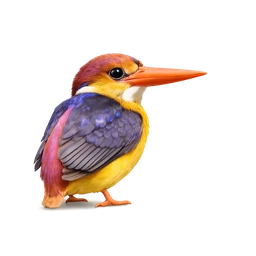
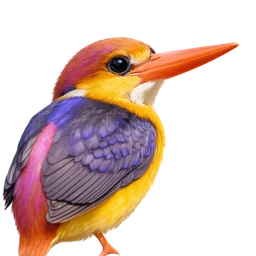
Profile
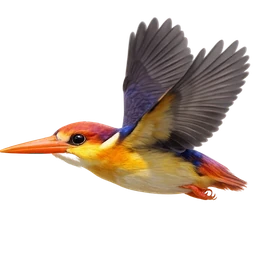
In flight
Kingfishers
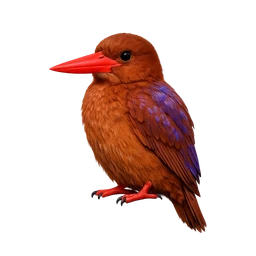
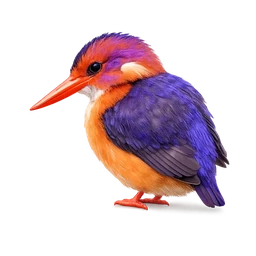
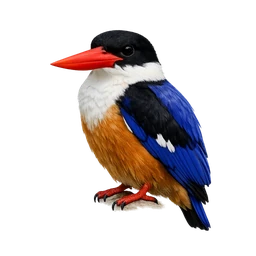
Oriental Dwarf Kingfisher
Ceyx erithaca
- epic
- 42 km/h
- Near Threatened
Pocket-sized jewel of Asian forest streams. Dives like a flying gem, nests in termite mounds or earthen banks.
- Population
- Not numerically quantified globally (described as rare to locally common); population suspected to be decreasing, with forest cover in its breeding/resident range declining ~15% over the past decade, driving an estimated 10-29% decline (midpoint ~15-25%) over three generations (IUCN/BirdLife 2023 assessment, criteria A2c+3c+4c)
- Habitat
- Lowland primary and mature secondary broadleaf evergreen and mixed deciduous forest, especially near pools, creeks and streams; also alluvial forest, mangroves, and shaded plantations (e.g. rubber gardens); mostly below 600 m, locally recorded up to ~1,000-1,300 m
- Fun fact
- One of the smallest kingfisher species in the world, only slightly larger than a hummingbird, the Oriental Dwarf Kingfisher nonetheless excavates its own nesting tunnel up to a meter long into a stream bank, a task a pair can complete in well under an hour of digging.
- Range
- South and Southeast Asia in two disjunct blocks: (west) the Western Ghats and Sri Lanka, plus a resident population in the Andaman and Nicobar Islands; (east) eastern Bangladesh, northeastern India (with a narrow extension into Bhutan's Himalayan foothills), Myanmar, southern China (Yunnan, Hainan), Thailand, Laos, Cambodia and Vietnam through the Malay Peninsula and Sumatra (Indonesia). Northern Indian and much of the eastern-block population are partial migrants, retreating south (many to Peninsular Malaysia and Sumatra) for the winter.
- Diet
- Mainly insects (grasshoppers, mantises, beetles, ants, mayflies, water beetles, flies) and spiders, plus worms, small crabs, small fish, frogs and lizards, taken from streams, pools and forest floor
- Size
- 0.13 m
- Lifespan
- 4 years