
Profile
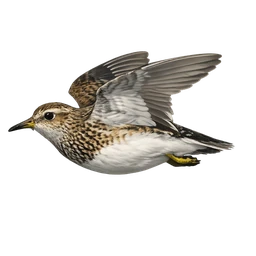
In flight
Cranes & Waders
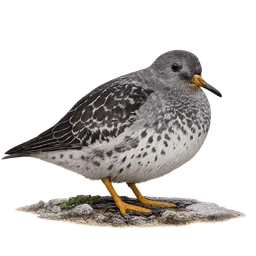
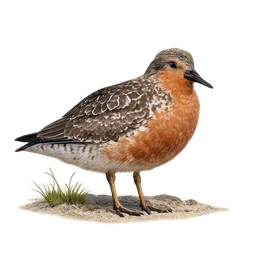
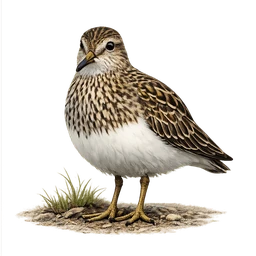
Pectoral Sandpiper
Calidris melanotos
- common
- 28 km/h
- Starter
- Least Concern
Males inflate a fat throat sac and make a hooting sound across the tundra. Courier with a built-in subwoofer.
- Population
- Roughly 4-15 million mature individuals (best estimate ~8-15 million); population trend unknown (regional trends conflict)
- Habitat
- Breeds on Arctic tundra, usually in wet, boggy areas; on migration and in winter uses freshwater and brackish marshes, wet grasslands/meadows, coastal lagoons, and flooded agricultural fields (occasionally to 4,500 m in the Andes)
- Fun fact
- During courtship, male Pectoral Sandpipers inflate an air sac in the chest/throat to puff up their breast and produce a low hooting sound as they fly low over the tundra to attract mates.
- Range
- Breeds across the Arctic from Russia's Taymyr Peninsula through Alaska and Arctic Canada; migrates through North and Central America; winters mainly in South America (Peru to Patagonia), with some birds reaching Australia and New Zealand; occasional vagrant to Western Europe and North Africa
- Diet
- Mainly arthropods and other invertebrates - insects and their larvae (e.g. flies), spiders, and small crustaceans - plus some seeds
- Size
- 0.21 m
- Wingspan
- 0.41 m
- Lifespan
- 6 years