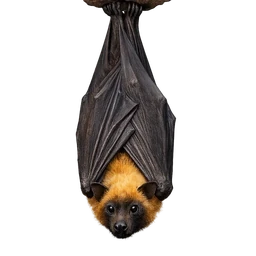
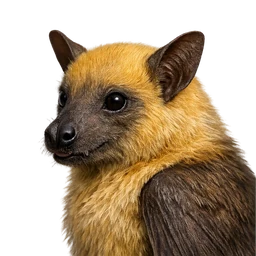
Profile
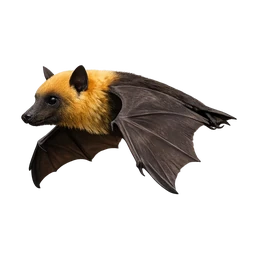
In flight
Bats
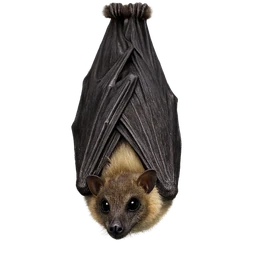
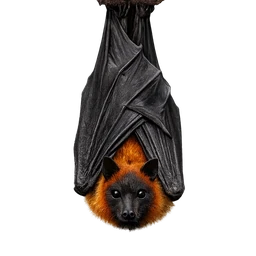
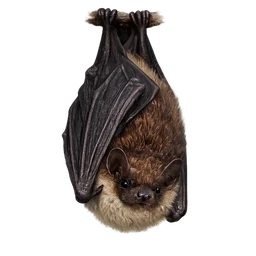
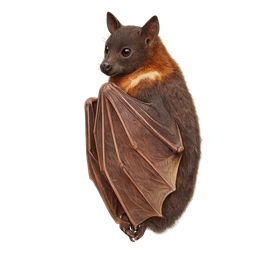
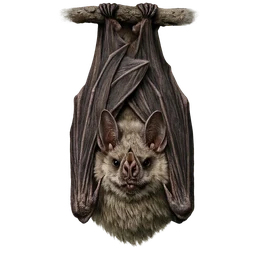
Straw-colored Fruit Bat
Eidolon helvum
- legendary
- 1228 km/h
- Near Threatened
Ten million gather in Zambia each November in the world's largest mammal migration. One queue, no delays.
- Population
- No global census exists; regionally abundant with colonies of 100,000+ common, and seasonal roosts (notably Kasanka National Park, Zambia) swelling to several million to as many as 10 million individuals during the Oct–Dec migration; overall population trend is decreasing, driven mainly by bushmeat hunting (~128,400 traded annually in southern Ghana alone)
- Habitat
- Tropical/coastal forest, savanna, mangrove, and urban/agricultural areas from sea level up to about 2,000 m elevation; roosts communally (often 100,000+ individuals) in tall trees, frequently in cities
- Fun fact
- Each October–December, several million to as many as 10 million straw-colored fruit bats converge on a tiny patch of swamp forest in Zambia's Kasanka National Park to feed on ripening fruit, forming one of the largest mammal aggregations on Earth — a migration that wasn't scientifically documented until 1980.
- Range
- The most widely distributed fruit bat in Africa: sub-Saharan Africa from Senegal to Ethiopia south to South Africa, plus Madagascar and the southwestern Arabian Peninsula (Yemen)
- Diet
- Frugivorous — sucks juice/pulp from fruit (mangoes, figs, dates, baobab) and discards fibrous material; also eats flowers, nectar, leaves, and chews bark/wood, an important seed disperser (e.g. African teak, Milicia excelsa)
- Size
- 0.18 m
- Wingspan
- 0.76 m
- Lifespan
- 21 years