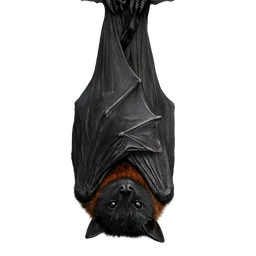
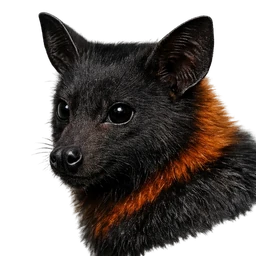
Profile
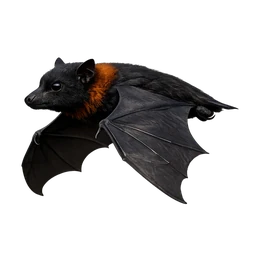
In flight
Bats
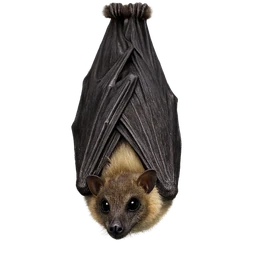
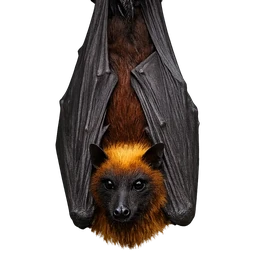
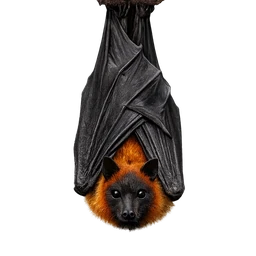
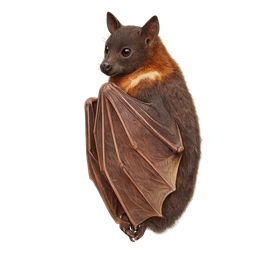
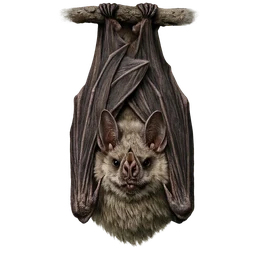
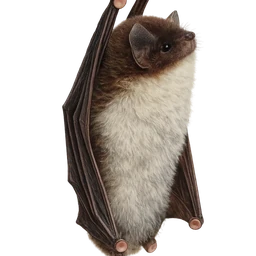
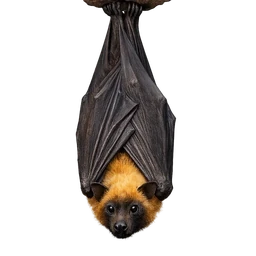
Black Flying Fox
Pteropus alecto
- epic
- 45 km/h
- Least Concern
Australia's largest bat, roosting in loud colonies of thousands. Travels 50 km a night for the right fig.
- Population
- No precise global population figure published by IUCN; species described as widespread, abundant, and forming large roosting camps (hundreds to tens of thousands of individuals) across its range
- Habitat
- Mangroves, paperbark (Melaleuca) swamps, rainforest patches, bamboo forests, eucalypt open forests and savanna woodlands; forms large daytime roosting "camps" 12-18+ m up in tree canopy, rarely in caves or under overhangs
- Fun fact
- Black flying foxes can travel over 50 km a night from their roosting camp in search of flowering or fruiting trees, making them important long-distance pollinators and seed dispersers, but they are also notably heat-sensitive, with mass die-offs recorded once ambient temperatures climb above about 40C.
- Range
- Coastal tropical/subtropical northern and eastern Australia (Western Australia, Northern Territory, Queensland, New South Wales), extending up to ~250 km inland, plus Papua New Guinea (Western Province) and Indonesia (West Papua, Sulawesi, Sumba, Savu); roughly 0-29 degrees south latitude
- Diet
- Nectarivore/frugivore generalist: nectar, pollen and blossom of eucalypts, paperbarks, lilypillies and turpentine trees (23+ rainforest plant species recorded), plus native and introduced fruits (figs, mangoes, apples, cocos palm); shifts foraging habitat seasonally (eucalypt forest in dry season, Melaleuca in build-up, rainforest in wet season)
- Wingspan
- 1 m
- Lifespan
- 15 years