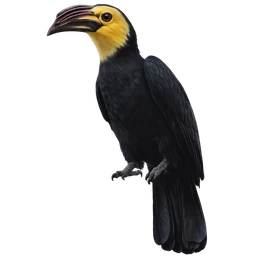
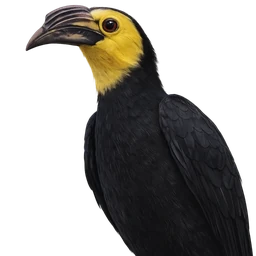
Profile
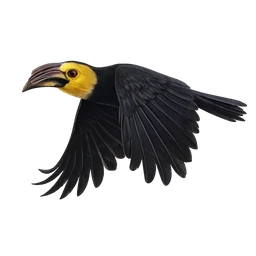
In flight
Hornbills
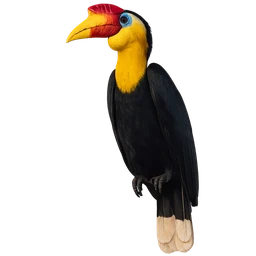
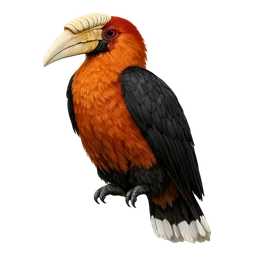
Sulawesi Hornbill
Rhabdotorrhinus exarhatus
- epic
- 49 km/h
- Vulnerable
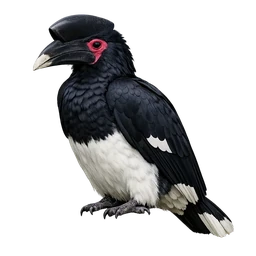
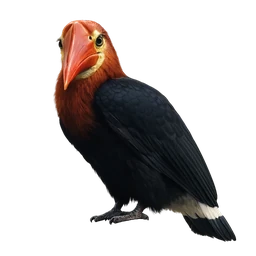
Vulnerable, Sulawesi-only. The smallest ridged hornbill, mostly dark with pale face markings. Low-key until it calls.
- Population
- Global population not quantified; described as uncommon throughout its range, with a suspected decline of 30-39% over three generations driven by forest loss/degradation (26-28% habitat loss over 21 years) and selective logging of large nest trees
- Habitat
- Tropical lowland forest, swamp forest, and primary forest, mainly below ~650 m but ranging up to about 1,100 m elevation; requires large mature trees with natural cavities for nesting; also uses secondary/logged forest at lower densities
- Fun fact
- Females seal themselves inside a tree cavity using mud and their own droppings for the entire incubation period, relying on the male and helper birds from the group (which can number up to 20) to feed them through a narrow slit until the chicks are ready to fledge.
- Range
- Endemic to Indonesia: Sulawesi and nearby islands (Buton/Butung, Muna, Lembeh); Extent of Occurrence ~415,000 km²; two subspecies, R. e. exarhatus in north Sulawesi (and Lembeh), and R. e. sanfordi in central/east/south Sulawesi plus Buton and Muna
- Diet
- Mainly fruit (~85%) and figs, supplemented with insects and other small invertebrates
- Size
- 0.45 m