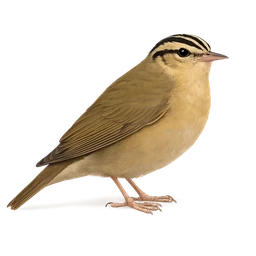
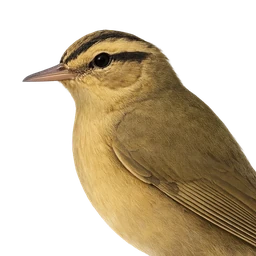
Profile
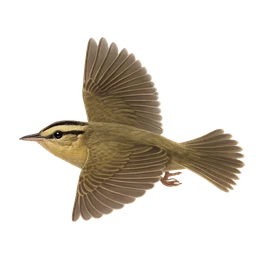
In flight
Songbirds
Worm-eating Warbler
Helmitheros vermivorum
- uncommon
- 36 km/h
- Least Concern
Doesn't actually eat worms. Probes dead leaf clusters for caterpillars. The name is vintage 1700s ornithology.
- Population
- ~780,000 mature individuals (BirdLife International, 2019 estimate), increasing trend
- Habitat
- Mature, closed-canopy deciduous (hardwood) forest with a dense shrub understory, typically on steep slopes with laurel, rhododendron, holly, or dogwood; coastal populations historically used pocosin shrub-bogs and now also use pine plantations. On the wintering grounds it uses scrub and moist forest, especially along the Caribbean slope.
- Fun fact
- Despite being named the "Worm-eating" Warbler, it almost never eats earthworms — the name instead refers to its habit of hunting caterpillars ("worms") in dead leaf clusters, and a flushed female will feign a broken wing, fluttering across the ground to lure predators away from her nest.
- Range
- Breeds in the eastern United States (southern New England and the mid-Atlantic south through the Appalachians and Gulf Coast states, west to the Ohio Valley/Great Lakes region); a long-distance Neotropical migrant that winters from southern Mexico through Central America and the Greater Antilles/Caribbean.
- Diet
- Primarily arthropods, especially caterpillars (Lepidopteran larvae) and spiders; gleans prey from live foliage on the breeding grounds and almost exclusively from clusters of dead, curled leaves on the wintering grounds. Despite its common name, it rarely if ever eats actual earthworms.
- Size
- 0.125 m
- Wingspan
- 0.21 m
- Lifespan
- 8 years