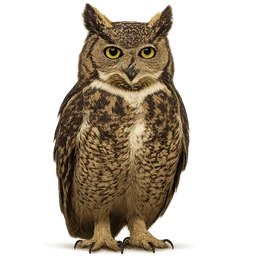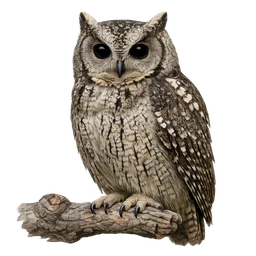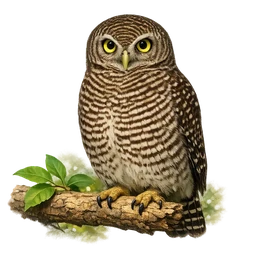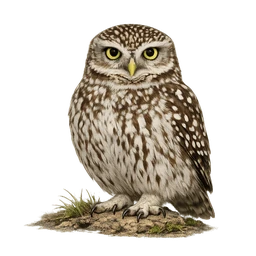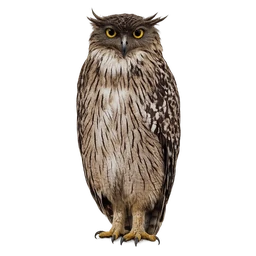
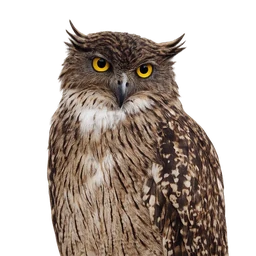
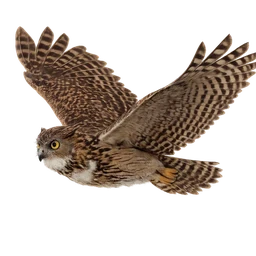
Burung hantu (Owls)
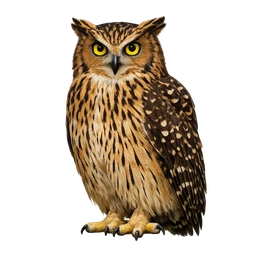
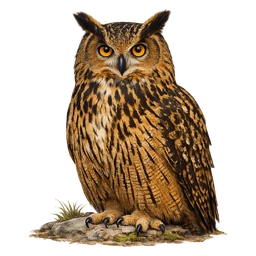
Brown Fish Owl
Ketupa zeylonensis
- tidak umum
- 36 km/h
- Risiko rendah
Wades into shallow rivers at dusk to snatch fish. No feathered feet, no problems. Widespread and unbothered.
- Populasi
- Not quantified — the global population size is listed as unknown, but is not believed to approach the <10,000 mature individuals threshold for Vulnerable; the trend is assessed as decreasing, though not rapidly enough to qualify as threatened. The species is described as the most widely distributed and most common of the fish owls, but as a large predator it rarely occurs at high density — Sri Lanka being an exception, where it has adapted well to human-modified habitat.
- Habitat
- Forests, woodlands, and ravines bordering rivers, lakes, and rice fields; typically close to water, from lowland open woodland to dense forest, plantations, occasionally up to 1,500m in the Himalayas
- Fakta menarik
- The Brown Fish Owl has bare, spiny-soled feet with no feathering on the lower legs — a specialized adaptation for gripping slippery fish, unlike most owls whose legs are fully feathered.
- Sebaran
- Turkey and the Middle East through South and Southeast Asia (Levant population, incl. Israel, probably extinct as a breeder; range exceeds 7,000 km, the most widely distributed of the four living fish owl species)
- Makanan
- Mainly fish, frogs, and crabs (especially Potamon crabs), supplemented by reptiles (snakes, lizards), small mammals (incl. bats), birds, water beetles/insects, and occasionally carrion
- Ukuran
- 0,55 m
- Bentang sayap
- 1,3 m
- Masa hidup
- 10 tahun