
Jenjang dan burung perancah (Cranes & Waders)
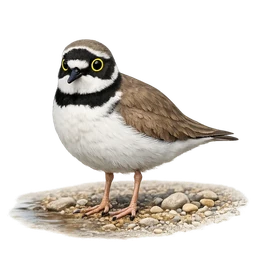
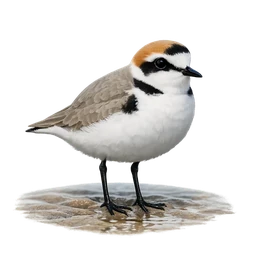
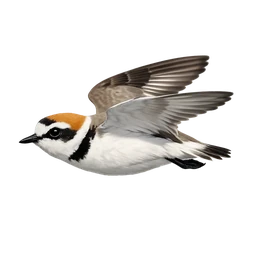
Kentish Plover
Charadrius alexandrinus
- langka
- 55 km/h
- Risiko rendah
A pale shore-runner whose nest is little more than a scrape in burning sand. Tide and footprint are forever its closest neighbors.
- Populasi
- 100,000–500,000 mature individuals globally (declining trend); European population roughly 43,000–70,000 pairs/individuals
- Habitat
- Alkaline lake shores, salt pans/lagoons, sandy and shingle coasts, sand dunes, tidal mudflats, and semi-arid/steppe interior sites with sparse vegetation, generally low-elevation and away from heavy human activity.
- Fakta menarik
- Kentish Plovers have an unusually flexible mating system in which females frequently desert their mate and brood partway through chick-rearing to seek a new partner and start a second clutch, leaving the male to raise the first brood alone.
- Sebaran
- Breeds across the Western Palearctic, North Africa, Central Asia and eastward to eastern China, southern Japan and the Ryukyu Islands, plus the Arabian Peninsula, Cape Verde, the Canary Islands, the Azores, and parts of South Asia (Sri Lanka/SE India); northern/inland populations winter south into sub-Saharan Africa, southern Asia, and as far as the Philippines, Indonesia and Borneo. A rare vagrant to Australia. Formerly bred in Britain (last confirmed nesting in Kent, 1979) but no longer does.
- Makanan
- Mainly small invertebrates — insects and larvae (beetles, flies, grasshoppers), molluscs, crustaceans, spiders, and marine/other worms — taken with a run-stop-peck foraging technique on wet sand, mud, or shoreline.
- Ukuran
- 0,16 m
- Bentang sayap
- 0,43 m
- Masa hidup
- 4,1 tahun