Unggas air (Waterfowl)
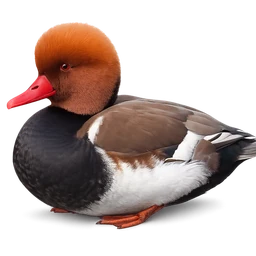
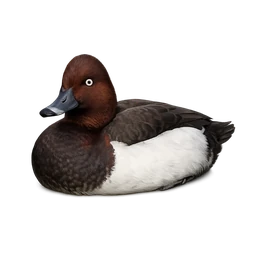
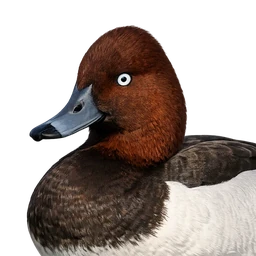
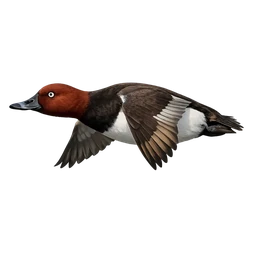
Madagascar Pochard
Aythya innotata
- mistis
- 65 km/h
- Kritis
Thought extinct for decades, rediscovered on one remote lake in 2006. Critically Endangered. One of the rarest ducks alive.
- Populasi
- ~33-47 mature individuals in the single wild population (commonly rounded to ~30-50), plus a captive-breeding cohort of 100+ birds at two facilities near Antsohihy and a reintroduced cohort at Lake Sofia
- Habitat
- Freshwater wetlands — historically shallow lakes and marshes (700-1,660 m elevation) with dense emergent vegetation used for nesting; the sole surviving/rediscovery population instead occupies a deep, cold volcanic crater lake (Lake Matsaborimena) with very little aquatic vegetation, and the reintroduced population uses protective floating aviaries at nearby Lake Sofia
- Fakta menarik
- The Madagascar Pochard was feared extinct in the late 1990s until a small population was rediscovered in 2006 on a remote volcanic crater lake, triggering a captive-breeding program that successfully reintroduced ducklings to Lake Sofia in 2018 using floating protective aviaries.
- Sebaran
- Endemic to Madagascar. Historically centered on Lake Alaotra; feared extinct through the 1990s until rediscovered in 2006 at Lake Matsaborimena in the far north, with a reintroduced population now established at nearby Lake Sofia. Occupies a single location with an extent of occurrence of ~25 km² and area of occupancy of ~4 km²
- Makanan
- Almost entirely aquatic invertebrates (chiefly caddisfly and dragonfly larvae, plus hemipterans and chironomid midge larvae), obtained by diving, with only a minimal amount of plant matter — unusual for a pochard
- Ukuran
- 0,45 m
- Masa hidup
- 3,7 tahun