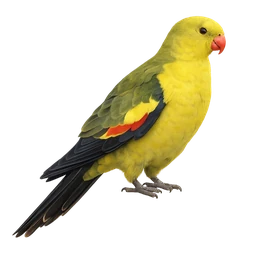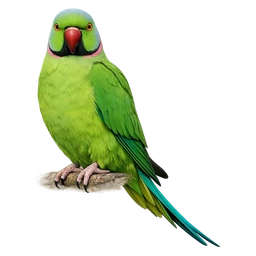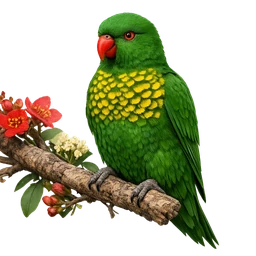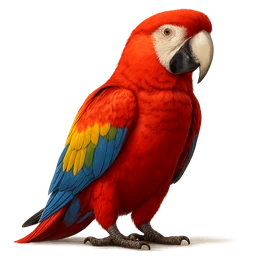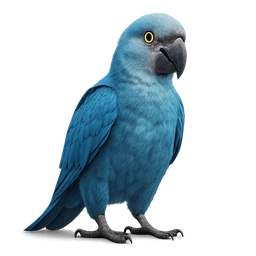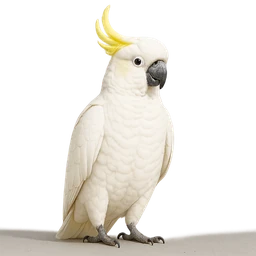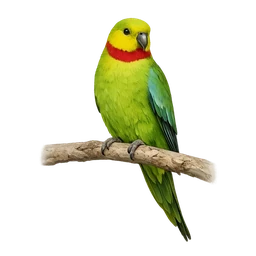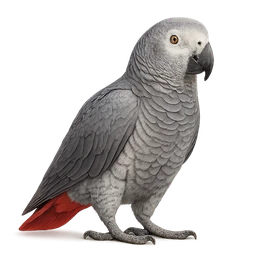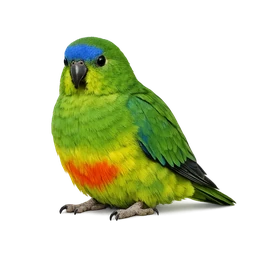
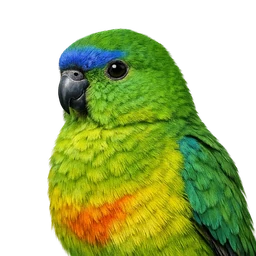
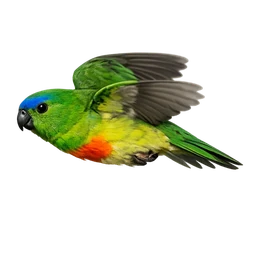
Burung paruh bengkok (Parrots)
Orange-bellied Parrot
Neophema chrysogaster
- mistis
- 45 km/h
- Kritis
Down to 14 wild birds in 2017, now slowly recovering. One of the world's rarest parrots, clinging to survival.
- Populasi
- ~91 wild individuals, recovered from a low of 14 in Feb 2017; captive "insurance population" of ~300 birds across Taroona, Healesville Sanctuary, Adelaide Zoo, Moonlit Sanctuary and Priam Parrot Breeding Centre. The species has also been described as having only 20-25 mature individuals and an "extremely rapid recent decline" — that number is now stale relative to the 2025 wild recovery, but it remains Critically Endangered because the population is still tiny and the species remains one-site-dependent.
- Habitat
- Breeds in eucalypt forest/woodland fringing button grass moorland in southwest Tasmania (sole extant breeding site: Melaleuca), nesting in tree hollows within about 30 km of the coast; winters in coastal saltmarsh, estuaries, dunes and lagoons within a few km of shore on the mainland
- Fakta menarik
- It is one of only three migratory parrot species in the world, crossing Bass Strait twice a year between its Tasmanian breeding grounds and mainland Australian wintering sites — one banded bird ("blue/black F") lived past age 9 and is thought to have made roughly 20 such crossings, though mean actual wild lifespan is only ~1.76 years given extremely high first-migration mortality.
- Sebaran
- Endemic to Australia: breeds only in southwest Tasmania (Melaleuca), migrates across Bass Strait to winter along the coast of Victoria and South Australia (historically as far as the Yorke Peninsula, SA, to southern New South Wales), with vagrants further afield
- Makanan
- Seeds and berries of coastal/saltmarsh plants, especially beaded glasswort (Salicornia quinqueflora) and shrubby glasswort (Tecticornia arbuscula), also coast fescue, saltbush, Austral seablite, sea heath and Coprosma berries; occasionally kelp
- Ukuran
- 0,235 m
- Bentang sayap
- 0,31 m
- Masa hidup
- 8 tahun