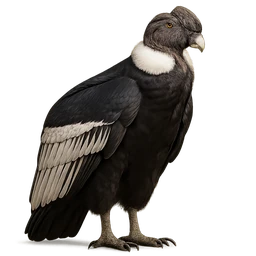
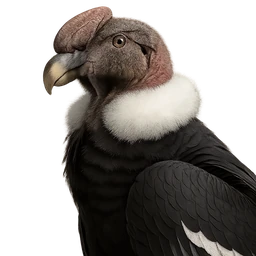
Profile
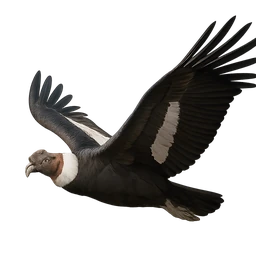
In flight
Vultures & Condors
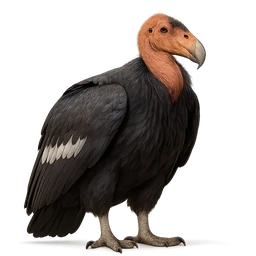
Andean Condor
Vultur gryphus
- rare
- 56 km/h
- Vulnerable
Soars over the Andes on 10-foot wings. Your message comes with altitude sickness.
- Population
- ~6,700 mature individuals (total population up to ~10,000), declining — reassessed from Near Threatened to Vulnerable in 2020
- Habitat
- Open grasslands, alpine páramo, and rocky mountainous terrain — generally non-forested areas that allow spotting of carrion from the air — from sea level up to about 5,000 m elevation; also uses cloud forest edges, lowland desert, coastlines, and Patagonian steppe
- Fun fact
- The Andean Condor has the largest wing area of any bird and, combining its size and weight, is generally considered one of the heaviest living flying birds, yet it flaps its wings only a small fraction of the time in flight, relying instead on thermals and updrafts to soar for hours.
- Range
- The Andes mountain range and adjacent coasts of western South America, plus the (non-Andean) Santa Marta Mountains of Colombia; from Venezuela and Colombia (now extremely rare/possibly extirpated in the north) south through Ecuador, Peru, Bolivia, Chile, and Argentina to Tierra del Fuego; vagrant to Brazil and Paraguay; historic range has contracted substantially in the northern portion
- Diet
- Obligate scavenger feeding almost exclusively on carrion, favoring large carcasses (llamas, alpacas, guanacos, deer, cattle, horses); ranges over 200 km/day searching for food; coastal populations rely heavily on beached marine-mammal carcasses
- Size
- 1.15 m
- Wingspan
- 2.83 m
- Lifespan
- 50 years