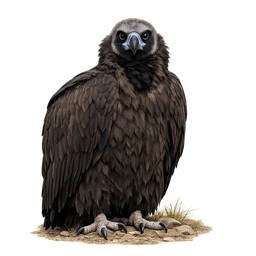
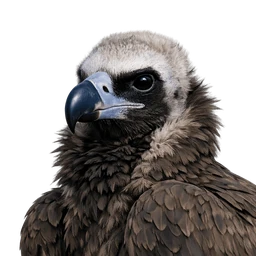
Profile
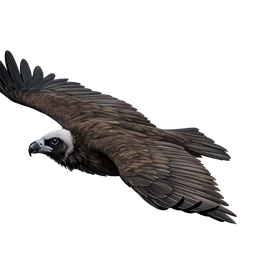
In flight
Vultures & Condors
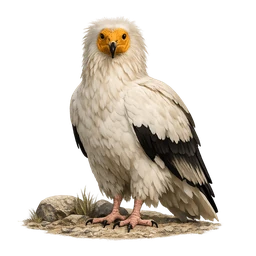
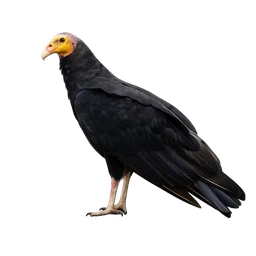
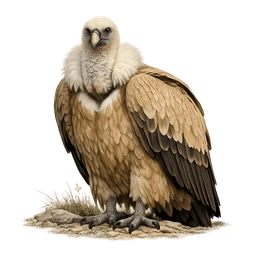
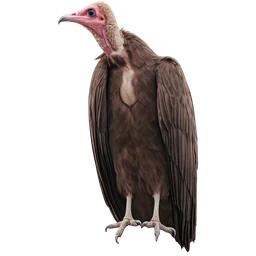
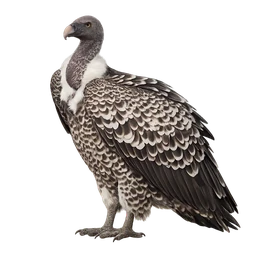
Cinereous Vulture
Aegypius monachus
- uncommon
- 40 km/h
- Near Threatened
The largest bird of prey in Europe, with a 10-foot wingspan. Carries messages on a wing the size of a door.
- Population
- 16,800–22,800 mature individuals (8,400–11,400 pairs), global population decreasing overall (Europe increasing/recovering via reintroduction, Asia declining)
- Habitat
- Mountainous and hilly terrain, dry semi-open habitats such as high-altitude meadows, temperate forest, grassland and alpine steppe, nesting in trees or on rocky cliffs, at elevations from roughly 300 to 4,500 m
- Fun fact
- The Cinereous Vulture is one of the world's heaviest flying birds (females up to about 14 kg) and possesses a specialized hemoglobin subunit giving its blood unusually high oxygen affinity, letting it soar at extreme altitudes — it has been recorded at roughly 6,970 m (22,870 ft) on the slopes of Mount Everest.
- Range
- Breeds across southern Europe (Spain, Portugal, Bulgaria, Greece) through Turkey, the Caucasus, Russia, Kazakhstan, Central Asia, Mongolia, China and Korea; winters south into the Middle East (Saudi Arabia, Iran), the Indian subcontinent (Pakistan, India, Nepal) and parts of East Africa (Sudan)
- Diet
- Obligate scavenger feeding almost exclusively on carrion of large mammals (sheep, deer, yak, bharal carcasses depending on region), with a powerful bill enabling access to bone and deep tissue on large carcasses; occasionally fish or reptile remains
- Size
- 1.1 m
- Wingspan
- 2.8 m
- Lifespan
- 39 years