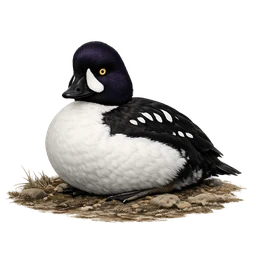
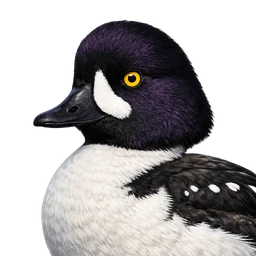
Profile
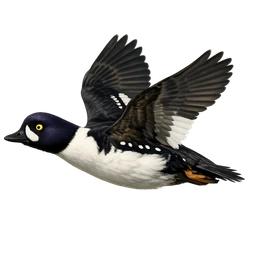
In flight
Waterfowl
Barrow's Goldeneye
Bucephala islandica
- uncommon
- 40 km/h
- Least Concern
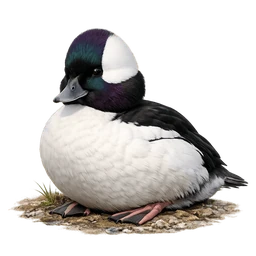
Crescent-shaped white face patch, named for John Barrow of Arctic exploration fame. Mountain lakes are its summer home.
- Population
- 175,000–200,000 mature individuals (2020 global estimate, BirdLife/IUCN)
- Habitat
- Wooded lakes and ponds in boreal/subalpine-montane forest during the breeding season (nesting in tree cavities 6–48 ft up, or rock crevices, near clear fish-poor lakes at elevations up to ~6,100 ft); winters on sheltered coastal marine waters (bays, harbors, inlets near mussel beds) and some open inland lakes/rivers.
- Fun fact
- Barrow's Goldeneye nests in tree cavities (or rock crevices near mountain lakes), and within about two days of hatching the flightless, down-covered ducklings must leap from the nest — sometimes many meters to the ground or water — to follow their mother.
- Range
- Breeds in northwestern North America (southern Alaska south through western Canada and the U.S. Rocky Mountains/northern California), with small disjunct populations in eastern Canada (Labrador/Quebec) and Iceland (historically also Greenland, likely extirpated there); winters mainly along the Pacific and parts of the Atlantic/northeastern coast of North America and around Iceland; a rare vagrant to western Europe and the southern U.S.
- Diet
- Primarily aquatic invertebrates — crustaceans (amphipods such as Gammarus and Calliopius, crayfish), mollusks (mussels, periwinkles, gastropods), and aquatic insect larvae — plus some small fish and pondweed/aquatic vegetation; seasonally shifts from insect larvae/crustaceans in the breeding season to mollusks (blue mussels, periwinkles) dominant in winter.
- Size
- 0.46 m
- Wingspan
- 0.71 m
- Lifespan
- 15 years