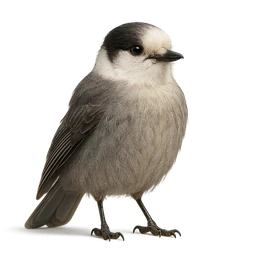
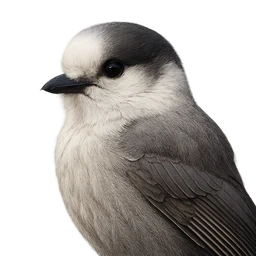
Profile
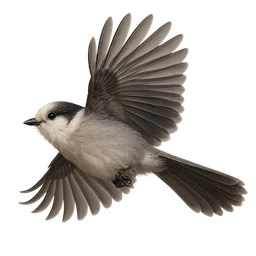
In flight
Clever Corvids
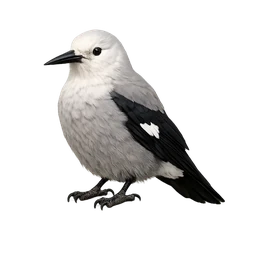
Canada Jay
Perisoreus canadensis
- common
- 32 km/h
- Starter
- Least Concern
Caches your message in a tree for later. Remembers thousands of hiding spots.
- Population
- Approximately 26 million mature individuals globally (IUCN Red List 2018 assessment, citing Partners in Flight); population trend is decreasing but the species remains far from any threatened-category threshold given its enormous range and population size.
- Habitat
- Coniferous and mixed boreal/subalpine forest, especially stands with black spruce, white spruce, Engelmann spruce, jack pine, or lodgepole pine; requires consistently cold conditions (for food caching to remain viable) and tree bark/lichen with pliable scales for storing cached food.
- Fun fact
- Canada Jays breed in late winter (as early as February) while snow still covers the ground, relying on thousands of food caches glued into tree bark and lichen with sticky saliva the previous summer and fall to feed their nestlings.
- Range
- Northern North America year-round resident: from northern Alaska across Canada to Newfoundland and Labrador, south through the Rocky Mountains to northern New Mexico and Arizona, and in boreal-relict pockets of northern Minnesota, Wisconsin, Michigan, the Adirondacks, and New England. IUCN describes an extent of occurrence of roughly 16.9 million km², resident in Canada and also breeding in the United States.
- Diet
- Omnivorous and opportunistic: arthropods, worms, small mammals (rodents, shrews, young bats), bird eggs and nestlings, carrion, fungi, berries (e.g. chokecherry), seeds, and human food/feeder offerings; famous for caching thousands of food items each summer/fall using sticky saliva to glue them to tree bark and lichen for winter survival.
- Size
- 0.29 m
- Lifespan
- 17 years