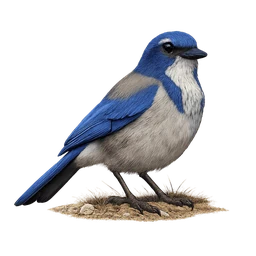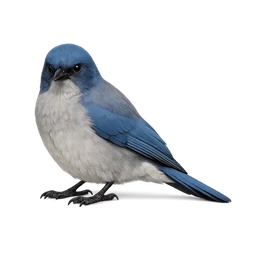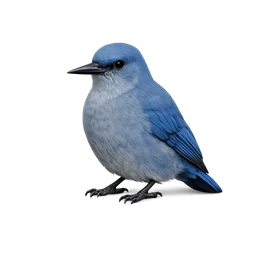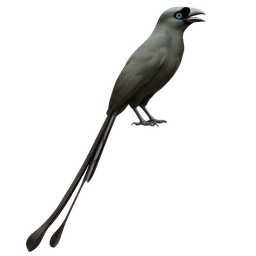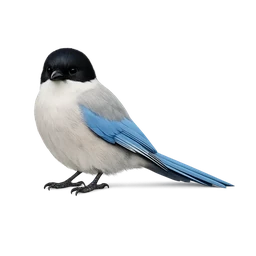
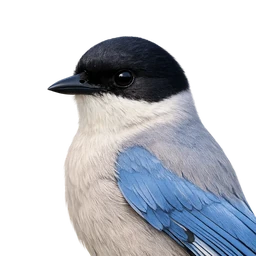
Profile
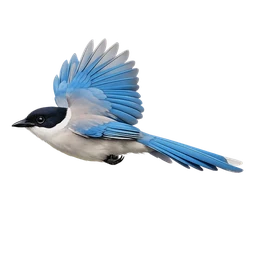
In flight
Clever Corvids
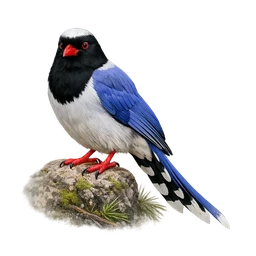
Iberian Magpie
Cyanopica cooki
- rare
- 42 km/h
- Least Concern
For centuries believed to be the same species as Asian magpies. DNA proved otherwise in 2002. Unique.
- Population
- 713,000-1,800,000 mature individuals (2021-derived estimate, most recent BirdLife/IUCN global assessment reaffirmed 2025); population trend increasing
- Habitat
- Open woodlands of oak and pine (holm/cork oak dehesas and pine stands), also eucalyptus plantations, olive groves, rural gardens and urban parks; found from sea level up to about 1,700 m in suitable habitat (SEO/BirdLife); some sources describe a lower typical ceiling near 700 m
- Fun fact
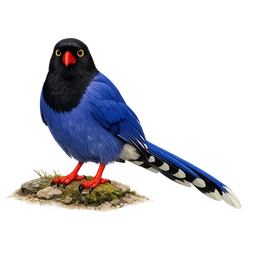
- Although it looks nearly identical to the Azure-winged Magpie of East Asia some 9,000 km away, genetic analyses (and a magpie fossil over 40,000 years old found in caves in Gibraltar) showed the Iberian Magpie evolved independently rather than descending from birds supposedly brought back by 16th-century Portuguese sailors during the Age of Discovery; it is now recognized as a distinct species, Cyanopica cooki.
- Range
- Endemic to the Iberian Peninsula - resident across most of Spain (except the northern and eastern fringes) and eastern/southern Portugal (extent of occurrence ~304,000 km²); vagrants occasionally recorded in southwestern France and northern Italy
- Diet
- Omnivorous forager: mainly insects (ants, beetles, larvae) and other invertebrates (incl. earthworms, snails, diplopods), plus acorns, pine nuts, cereal grains, olives, soft fruits (figs, grapes, cherries), carrion and refuse at landfills/rubbish dumps, and human-provided scraps; rarely takes small vertebrates
- Size
- 0.34 m
- Wingspan
- 0.39 m