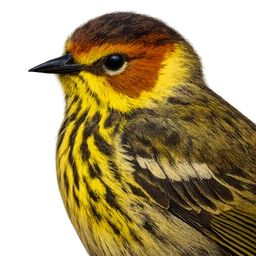
Profile
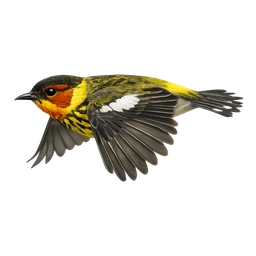
In flight
Songbirds
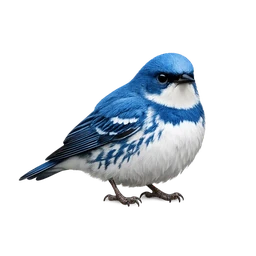
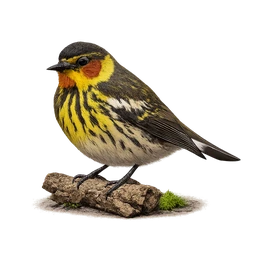
Cape May Warbler
Setophaga tigrina
- epic
- 72 km/h
- Least Concern
Tiger-striped face, brush-tipped tongue for sipping nectar. Booms during spruce budworm outbreaks and quiets between.
- Population
- ~7 million mature individuals (2019 estimate); increasing (~33% growth over prior decade per BirdLife DataZone, though statistically non-significant)
- Habitat
- Breeds in mature boreal spruce-fir forest (25-75 year old stands, medium forest dependency); winters in subtropical/tropical moist lowland forests, shrubby gardens, coffee plantations, parks, and occasionally urban areas/plantations across the West Indies
- Fun fact
- The Cape May Warbler is the only New World warbler with a curled, semi-tubular tongue, which it uses to lap up nectar and fruit juice on its Caribbean wintering grounds.
- Range
- Breeds across northern North America (southern Canada, Great Lakes region, and New England); winters primarily in the West Indies/Caribbean (Bahamas, Greater Antilles), with BirdLife DataZone noting occasional non-breeding range extending into parts of Central America and northern South America
- Diet
- Primarily insects during breeding season (spruce budworm can make up half or more of the diet, plus spiders, beetles, wasps); in winter shifts to fruit/berry juice and nectar, aided by a unique curled/semi-tubular tongue among New World warblers
- Size
- 0.13 m
- Wingspan
- 0.205 m
- Lifespan
- 4 years