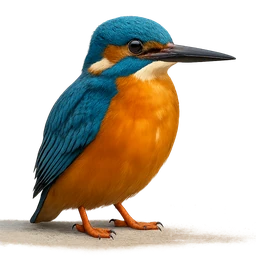
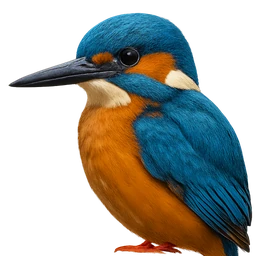
Profile
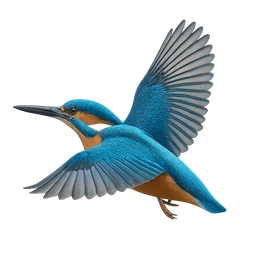
In flight
Kingfishers
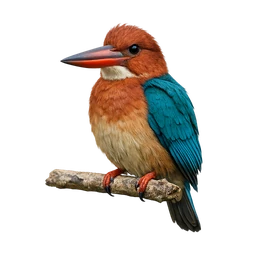
Common Kingfisher
Alcedo atthis
- uncommon
- 40 km/h
- Least Concern
A jewel-colored dart that strikes with surgical precision. Messages arrive clean.
- Population
- 716,000–1,760,000 mature individuals globally (BirdLife/IUCN 2018 estimate, explicitly flagged by BirdLife as poor-quality data); population trend decreasing but not approaching Vulnerable thresholds
- Habitat
- Clear, slow-flowing rivers, streams, and lakes with well-vegetated banks in temperate regions; mangrove creeks and swamps in the tropics
- Fun fact
- The Common Kingfisher has two foveae in each eye and switches from its main central fovea to an auxiliary one when diving, letting the image "swing temporally" as it drops onto prey — preserving accurate depth perception despite the differing refraction of air and water.
- Range
- Extremely large range across Eurasia and North Africa (mainly south of 60°N), extending through South and Southeast Asia into parts of the Pacific/Melanesia (Solomon Islands); breeding/resident range ~94,100,000 km², non-breeding range ~79,900,000 km²
- Diet
- Primarily small fish caught by diving from a perch or hover (in Central Europe fish make up ~99.9% of diet), also aquatic insects (e.g. dragonfly larvae, water beetles) and crustaceans; typical prey ~2.3 cm, occasionally up to 12.5 cm
- Size
- 0.16 m
- Wingspan
- 0.25 m
- Lifespan
- 21 years