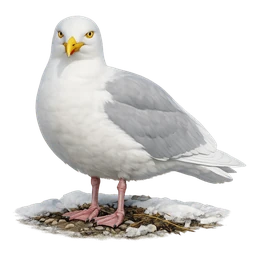
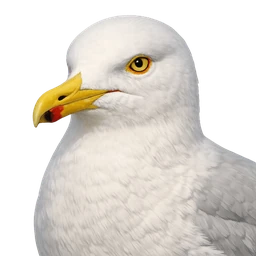
Profile
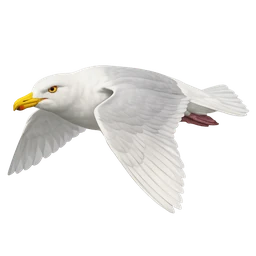
In flight
Seabirds
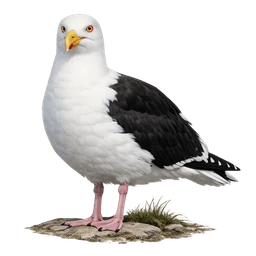
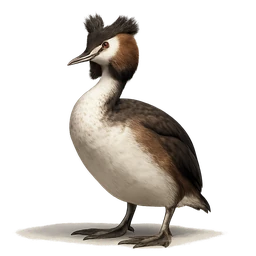
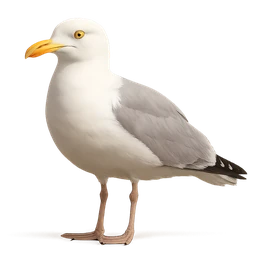
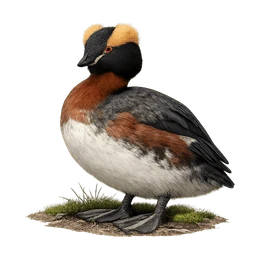
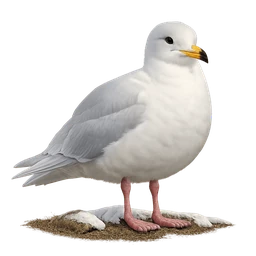
Glaucous Gull
Larus hyperboreus
- rare
- 84 km/h
- Least Concern
Massive pale gull of the high Arctic. Eats almost anything, including other birds.
- Population
- c. 400,000–1,500,000 mature individuals globally; stable trend (Europe subpopulation ~93,000–270,000 mature individuals)
- Habitat
- Arctic coasts, sea cliffs, tundra, and offshore/inshore islands for breeding; harbors, garbage dumps, estuaries, and inland lakes in winter
- Fun fact
- Nicknamed the "burgomaster" by early Arctic sailors, the Glaucous Gull is the world's second-largest gull and a notorious nest raider, regularly picking off the eggs and chicks of other seabird colonies.
- Range
- Circumpolar Arctic breeder across northern North America, Greenland, Iceland, northern Europe, and Siberia; European/Asian breeders largely resident near colonies, North American breeders migrate south along the Pacific coast to California (and across the North Pacific to southeastern Russia) and along the Atlantic coast to the northern/mid-Atlantic U.S. and Great Lakes, occasionally to the Gulf coast/northern Mexico; European wintering range extends to Brittany, the UK, and Ireland
- Diet
- Omnivorous opportunist and scavenger — fish, mollusks, starfish, carrion (including polar bear kills), offal, eggs, chicks and small birds/mammals (lemmings, voles, ground-squirrels), insects, berries, and human refuse; also kleptoparasitizes other seabirds
- Size
- 0.71 m
- Wingspan
- 1.5 m
- Lifespan
- 22 years