Profile
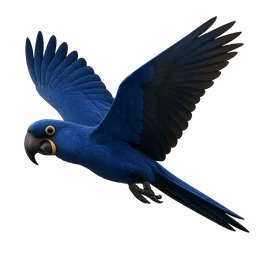
In flight
Parrots
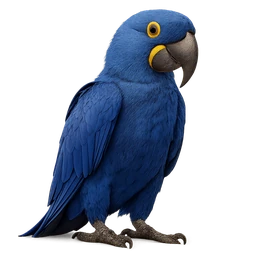
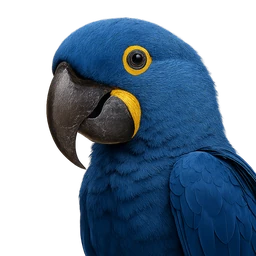
Hyacinth Macaw
Anodorhynchus hyacinthinus
- epic
- 48 km/h
- Vulnerable
The world's largest parrot, blazing cobalt blue. Cracks Brazil nuts and delivers in style.
- Population
- approx. 4,700–11,000 mature individuals (BirdLife/IUCN 2025 assessment)
- Habitat
- Semi-open, wooded landscapes rather than dense humid forest — várzea and savanna at forest edges in Amazonia, cerrado/caatinga and palm stands ("gerais") in central Brazil, and palm savanna/swamp in the Pantanal; tolerant of some habitat degradation; depends on large trees for nesting and roosting
- Fun fact
- The Hyacinth Macaw is the world's longest parrot species (about 1 meter beak-to-tail), yet its huge bill is so specialized that it reportedly cannot always open the rock-hard acuri palm nut until the nut has first passed through the digestive tract of cattle.
- Range
- Central and eastern South America in three disjunct populations: eastern Brazilian Amazonia (Pará/Amazonas), the "Gerais" region of central/northeastern Brazil (Maranhão, Piauí, Bahia, Tocantins, Goiás, Mato Grosso), and the Pantanal (Mato Grosso, Mato Grosso do Sul, and adjacent eastern Bolivia), with small populations in Paraguay
- Diet
- Specialist nut/seed feeder — mainly palm nuts (acuri/Attalea phalerata and bocaiuva/Acrocomia aculeata palms, among ~8 palm species used), plus some seeds, palm sprouts, fruit, and occasional snails; its extremely powerful bill (rated to crack loads that would require ~300 psi) can open coconuts, Brazil nuts, and macadamia nuts
- Size
- 1 m
- Wingspan
- 1.2 m
- Lifespan
- 50 years