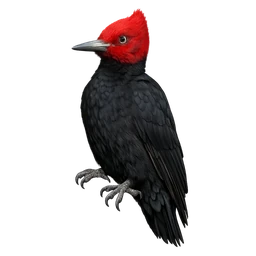
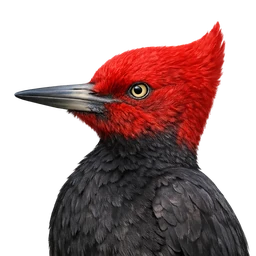
Profile
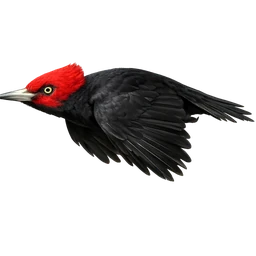
In flight
Woodpeckers
Magellanic Woodpecker
Campephilus magellanicus
- epic
- 45 km/h
- Least Concern
South America's largest woodpecker. Males drill nest cavities so deep they disappear inside to excavate.
- Population
- Unknown number of mature individuals; global population size has not been quantified. Population suspected declining (tree cover within range estimated to have declined ~4.7% over three generations) but species remains uncommon across a large range.
- Habitat
- Mature Nothofagus (southern beech) and Nothofagus-Austrocedrus temperate and subtropical forests with large-diameter trees, from dense bamboo-choked temperate rainforest to more open woodland, from sea level up to about 2,720 m elevation
- Fun fact
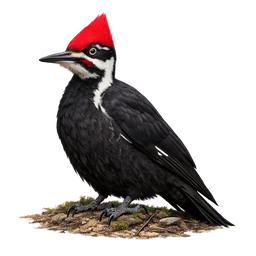
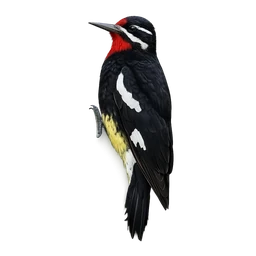
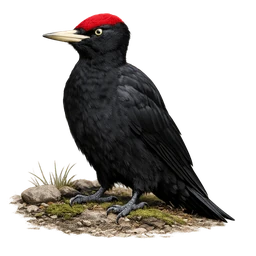
- The Magellanic Woodpecker is among the world's largest woodpeckers and likely the largest in South America; males have a crimson head and crest while females have a mainly black head (with red only near the base of the bill).
- Range
- Southern Chile and southwestern Argentina (Patagonia and the southern Andes); resident year-round; extent of occurrence roughly 891,000 km², with range contraction in south-central Chile due to forest clearance
- Diet
- Mainly wood-boring beetle grubs and adult beetles excavated from dead and dying trees, supplemented by spiders, tree sap, fruits, small reptiles, bats, and occasionally the eggs/nestlings of passerine birds
- Size
- 0.4 m