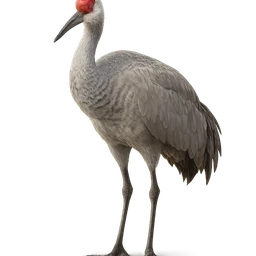
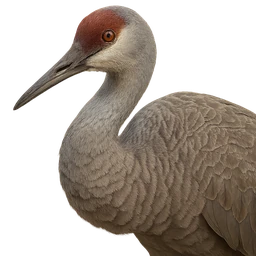
Profile
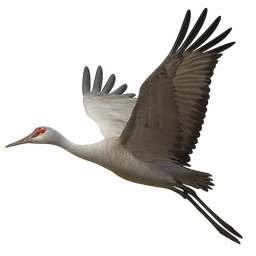
In flight
Cranes & Waders
Sandhill Crane
Antigone canadensis
- common
- 72 km/h
- Starter
- Least Concern
Migrates thousands of miles with ancient grace. One of the oldest bird species alive, with fossils 2.5 million years old.
- Population
- Approximately 670,000-830,000 individuals total (~450,000-550,000 mature), increasing, per BirdLife DataZone (2021 IUCN assessment) / Wetlands International 2020, consistent with Wikipedia's ~400,000-500,000 continent-wide figure. Note: International Crane Foundation's species field guide cites a considerably higher ~1,460,000 ± 230,000 — an unreconciled discrepancy between sources (see disputes).
- Habitat
- Freshwater wetlands, marshes, bogs, and wet meadows adjacent to open grasslands and prairies; during migration uses harvested grain fields and river sandbars for roosting
- Fun fact
- The sandhill crane has one of the longest fossil histories of any living bird, with an unequivocal fossil dated to about 2.5 million years old.
- Range
- Breeds from northeastern Siberia through Alaska and Canada into the northern U.S.; winters in the southwestern U.S. and Mexico; non-migratory resident populations occur in Florida, Mississippi, and Cuba (Birds of the World lists exactly these three non-migratory populations plus six migratory ones; Georgia's resident birds are generally treated as an extension of the Florida population rather than a separate one)
- Diet
- Omnivorous: roots, tubers, seeds and grains (especially waste corn), plus insects, earthworms, small mammals, reptiles, and amphibians
- Size
- 1.2 m
- Wingspan
- 2 m
- Lifespan
- 36 years