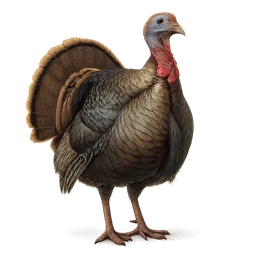
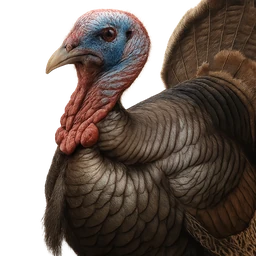
Profile
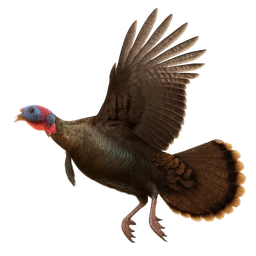
In flight
Game Birds
Wild Turkey
Meleagris gallopavo
- common
- 80 km/h
- Starter
- Least Concern
Lives mostly on the ground, but can briefly burst into flight at impressive speeds. Dignified gobble upon delivery.
- Population
- ~6.9-7 million (global population, largely North America; Cornell/Partners in Flight ~6.9M breeding estimate, Wikipedia cites ~7M current North American population after 20th-century reintroduction)
- Habitat
- Open hardwood and mixed conifer-hardwood forests with interspersed clearings; oak-hickory forests in the Northeast, pine-magnolia forests in the Southeast, oak savannas in the Southwest; also cypress swamps, grasslands, pastures, orchards, and field edges. Roosts in trees at night.
- Fun fact
- Wild Turkeys nearly vanished from the U.S. by the early 1900s due to overhunting and habitat loss, but 20th-century trap-and-transplant conservation programs restored their population to an estimated several million birds today — one of North America's great wildlife recovery stories (Wikipedia cites an ~18,700% population increase over 40 years per Breeding Bird Survey/Christmas Bird Count data).
- Range
- Native to North America: found across the continental United States (49 states, all except Alaska), southern Canada, and into Mexico; historically extirpated from much of its range by the early 20th century but restored via trap-and-transplant reintroduction programs; introduced populations also established in New Zealand, Hawaii, and parts of Europe (Czech Republic, Germany); earlier introduction attempts in Britain/Ireland failed. (BirdLife DataZone also lists Australia as an introduced range state.)
- Diet
- Omnivorous — primarily acorns, nuts, and other hard mast, plus seeds, berries, buds, leaves, fern fronds, roots, insects (beetles, snails), and occasional small amphibians (salamanders) and reptiles.
- Size
- 1.13 m
- Wingspan
- 1.35 m
- Lifespan
- 5 years