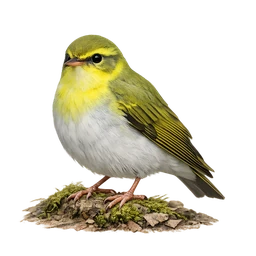
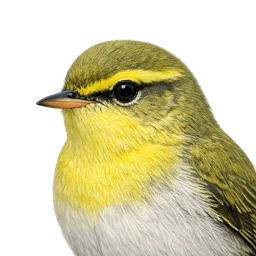
Profile
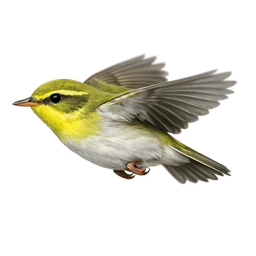
In flight
Songbirds
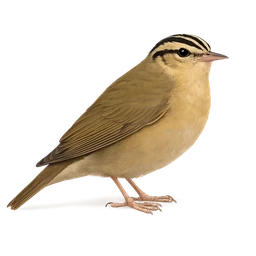
Wood Warbler
Phylloscopus sibilatrix
- rare
- 55 km/h
- Least Concern
Sings two completely different songs in succession. Delivers in two voices.
- Population
- European breeding population estimated at roughly 7 million pairs (per German Wikipedia/BirdLife-derived figures); no separately published global mature-individuals count located, but IUCN assesses the species Least Concern based on this large, though declining, range-wide population. Note: UK subpopulation is Red-listed nationally due to steep declines since the 1990s — a regional status, not the global IUCN category.
- Habitat
- Open, mature deciduous and mixed woodland with a closed canopy but sparse ground cover — especially beech and oak forest, from lowlands up to ~1,400 m in places like the Jura — used for both nesting (low domed nests near the ground) and canopy foraging
- Fun fact
- The wood warbler's song is one of the most distinctive in European woodland — a shivering, accelerating trill often likened to a spinning coin coming to rest, delivered from a mid-canopy perch and quite unlike the simpler songs of its close Phylloscopus relatives; RSPB notes it is becoming an increasingly rare sound in UK woods as the species declines there.
- Range
- Breeds across temperate Europe from Britain and France east through Scandinavia, Central Europe, the Balkans and Ukraine to the western edge of Siberia (southern Ural Mountains); the entire population migrates to winter in tropical sub-Saharan Africa
- Diet
- Insectivorous — gleans insects, spiders and other invertebrates (and their larvae) from foliage, supplemented by berries in autumn before migration
- Size
- 0.12 m
- Wingspan
- 0.215 m
- Lifespan
- 8 years