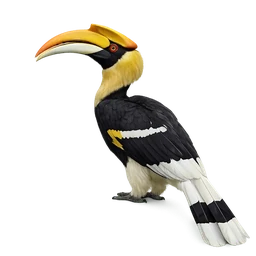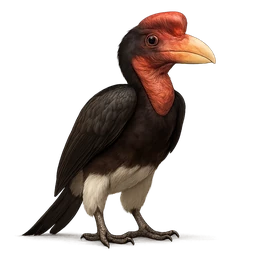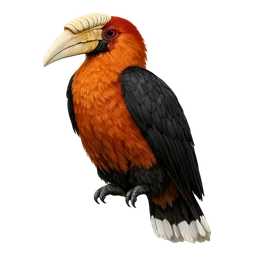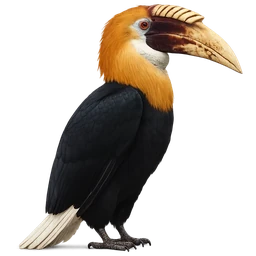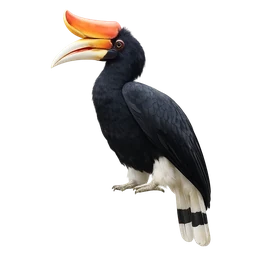
Rangkong (Hornbills)
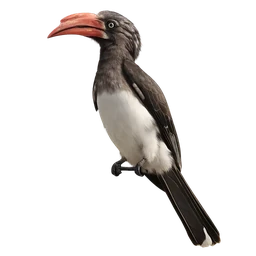
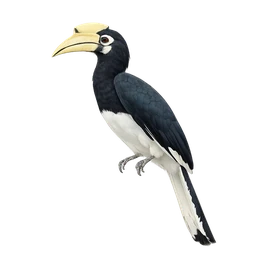
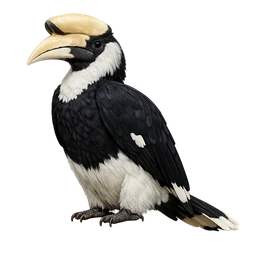
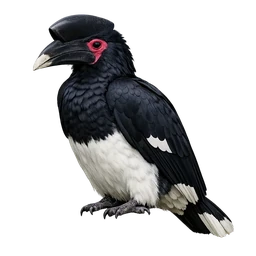
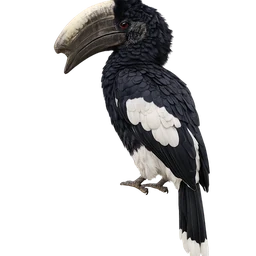
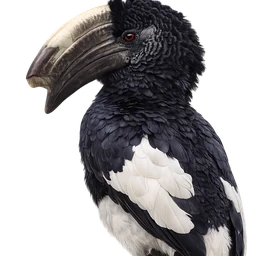
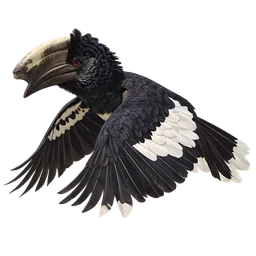
Black-and-white-casqued Hornbill
Bycanistes subcylindricus
- tidak umum
- 43 km/h
- Risiko rendah
Plasters its mate inside a nest cavity with mud and dung, then feeds her figs through a slit for weeks.
- Populasi
- Not quantified globally; described as locally uncommon to common (more consistently common in central/eastern Africa than in the west), with a suspected declining population trend
- Habitat
- Subtropical/tropical moist lowland and montane forest, transition zones between evergreen and secondary forest, and tall deciduous woodland; requires primary forest with large trees for nesting cavities; found from sea level to 2,600 m, tolerant of some plantation/cultivated habitat but avoids heavily degraded forest and dry savanna
- Fakta menarik
- Males and females can be told apart at a glance by their casque (the bony helmet-like structure atop the bill) and eye color — males have a larger, more prominent black casque and red eyes, while females have a smaller casque, a black bill, and brown eyes.
- Sebaran
- West, Central and East Africa: from Sierra Leone/Liberia and Côte d'Ivoire east through Nigeria, Cameroon and the Central African Republic to Sudan, DR Congo (Zaire), Uganda, Kenya and Tanzania, with an isolated population in northern Angola; extent of occurrence ~7,600,000 km²
- Makanan
- Predominantly frugivorous (figs, Ficus spp. make up the bulk of intake, roughly 90%), supplemented by opportunistic hunting of small animals including lizards, insects, snails, bats, and the eggs/nestlings of other birds; obtains most water from food
- Ukuran
- 0,65 m
- Bentang sayap
- 0,83 m
- Masa hidup
- 15 tahun