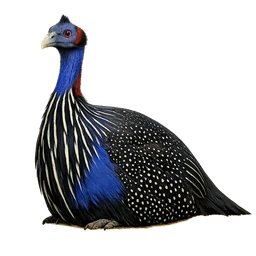
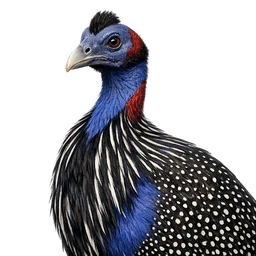
Profile
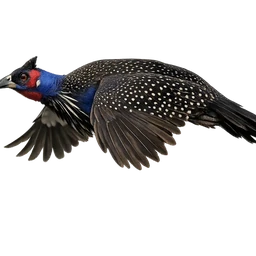
In flight
Game Birds
Vulturine Guineafowl
Acryllium vulturinum
- legendary
- 35 km/h
- Least Concern
The most spectacular guineafowl alive. Electric blue breast, bare vulture neck, and hackles striped black, white, and blue.
- Population
- Population size not quantified; suspected stable in the absence of evidence for decline or substantial threats (BirdLife/IUCN assessment)
- Habitat
- Dry, open savanna and grassland with scattered bushes and trees (arid/semi-arid thorn-scrub); also uses dry shrublands, scrubland at forest edges, and some subtropical/tropical moist montane forest edges, from sea level up to about 1,900 m elevation
- Fun fact
- The vulturine guineafowl is the largest living guineafowl species and gets its name from its bare, vulture-like head and neck; it lives in some of the most stable, complex multi-family social groups known outside primates, with individuals maintaining the same flock associations for years despite no strict linear hierarchy.
- Range
- Resident (non-migratory) in northeast Africa: southern Ethiopia, northern/northwestern and southwestern Somalia, arid northern and eastern Kenya, and just into northeastern Tanzania; estimated range of roughly 1,500,000 km²
- Diet
- Omnivorous ground forager: primarily seeds, leaves, berries, fruits, roots, bulbs, buds and shoots, plus insects, spiders, scorpions, small molluscs, and occasionally small reptiles/rodents
- Size
- 0.66 m
- Lifespan
- 20 years