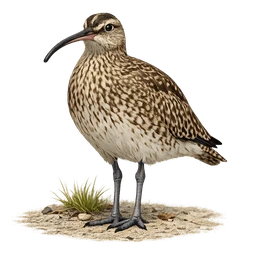
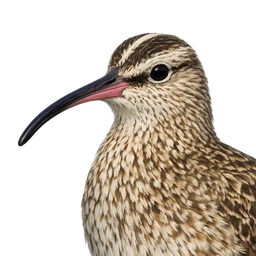
Profile
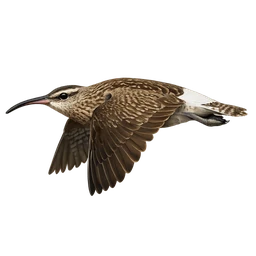
In flight
Cranes & Waders
Whimbrel
Numenius phaeopus
- common
- 28 km/h
- Starter
- Least Concern
Curved bill, seven-note whistle, and a 2,500-mile nonstop migration. Carries messages and a built-in ringtone.
- Population
- 1,800,000–2,650,000 mature individuals, decreasing (BirdLife International/IUCN Red List, 2024 global assessment; ~90% of global population in three large African-wintering flyway groups, which are stable, while Atlantic-flyway New World populations have declined ~70%)
- Habitat
- Breeds on subarctic/Arctic tundra, moorland, and lowland grasslands/wetlands with low vegetation; on migration and in winter uses mudflats, sandy beaches, rocky shores, salt marshes, flooded/coastal agricultural fields, and mangroves
- Fun fact
- The Whimbrel gets its name from its distinctive call — a rapid, trilling series of about seven evenly pitched whistled notes.
- Range
- Breeds across the Holarctic in two disjunct-population groups: Old World (Iceland, northern Europe/Scotland/Scandinavia through north-central Siberia) and New World (coastal Alaska/Yukon, and separately west/south of Hudson Bay from Manitoba to Ontario). Winters on coasts of Africa, South Asia, and Australasia (Old World populations), and on Pacific and southeastern US coasts, Central America, and South America (New World/Hudsonian populations)
- Diet
- Probes soft mud with its long decurved bill for invertebrates such as marine worms and small mollusks, picks small crabs, amphipods, and other crustaceans from the surface, and shifts to eating insects and berries (e.g., crowberry, cranberry) on breeding grounds and before migration
- Size
- 0.42 m
- Wingspan
- 0.82 m
- Lifespan
- 20 years